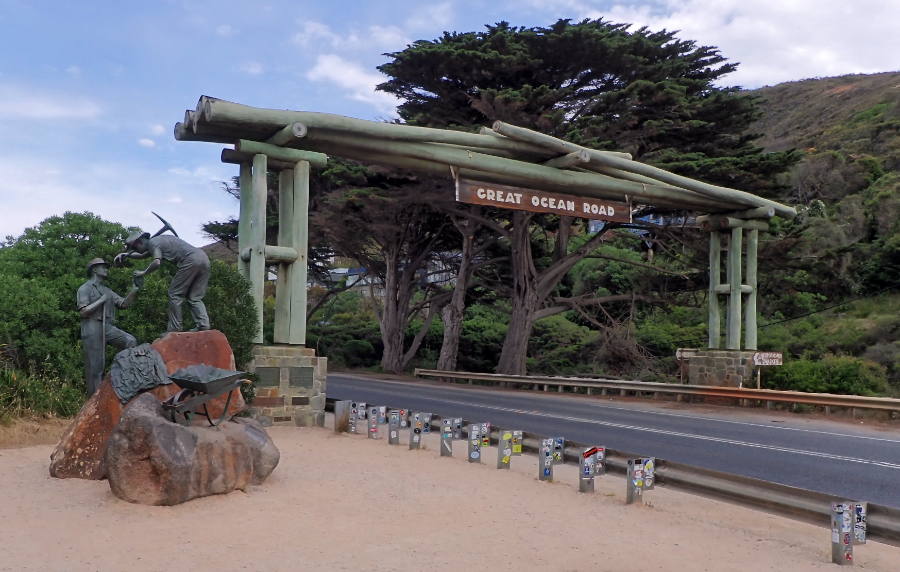
A memorial marks the beginning of the Great Ocean Road
“To err is human, but to really ‘ef’ something up, use a computer.”
I’d like to amend that saying to: “To err is human, but to really ‘ef’ something up, fly Qantas.”
This was how our latest adventure to southern Australia began.
Get ready for some STUNNING photos. Seriously – I’m not kidding.
A couple of our Aussie friends suggested we tour the Great Ocean Road along the south coast. We looked into it and quickly decided it was a must-do. Yes, you can drive it in a single day if you’re determined, caffeinated, and willing to treat scenery as background noise. Or faster still by helicopter, if your wallet is feeling brave. But that wasn’t our style. We wanted to slow it down, take our time, and add something else that had been lingering on our Australian wish list for years: visiting an opal mine.
So we planned a three-week trip. In this post, we’ll take you along Australia’s Great Ocean Road. In a later one, we’ll take you underground.
The logical starting point for the Great Ocean Road is Melbourne. For us, that meant flying from Brisbane. Domestic flights in Australia, much like Europe, are generally reasonable. We booked round-trip tickets on Qantas, including upgraded emergency-row seating on both legs, for AUD 1,152.62. That works out to about US$760 total, or roughly US$380 per person round trip.
Believe it or not, that’s on the higher end. We’re traveling during the holiday season and booked with only about three weeks’ notice. Had we been more price-savvy and skipped the seat upgrade, we could have flown for closer to US$225 round trip for the two-hour flight.
We’ve flown Qantas before, so we were already familiar with some of the “quirks” we might encounter. On our first Qantas flight, online check-in simply didn’t work. This time, it did. We printed our boarding passes at home.
That turned out to be a complete waste of time and paper.
We dropped off our long-term Brisbane rental car and took the train to Brisbane Airport. You’ve already heard my praise for Queensland’s public transportation system. The glaring exception is the airport train, which is privately operated. I’m sure there’s an entertaining political backstory buried somewhere. The short trip from Eagle Junction to the airport costs AUD $20 per person, compared to AUD $0.50 for nearly every other train or bus ride. The chaos officially begins when we arrive.
The days of curbside check-in with a human and a conveyor belt behind them are long gone. Airlines now seem to compete over how few employees they can staff an airport with, and Qantas is fully committed to this philosophy.
Our first task is to check-in and then check our bag. We walk up to a vacant kiosk and scan our boarding pass. Nothing happens.
This was déjà vu. Last time, we needed help from an employee. This time, the terminal is packed and no help is in sight. Eventually, we spot a guy replacing tape in one of the kiosks. We explain that our boarding pass won’t scan. From his expression alone, it’s clear we are not the highlight of his morning.
He takes Cindy’s boarding pass and places it face down on the scanner. Cindy politely points out that the instructions say to place it face up. Welcome to Qantas. He says it works better face down. It doesn’t work.
Next, he asks if we have the reservation on our phone so we can scan the QR code from the screen. I begin explaining that we’re not Australian and that the Qantas reservation page doesn’t play nicely with non-Australian phone numbers. This seems like a curious design choice for an international airline. Welcome to Qantas.
Eventually, it’s decided the kiosk is “not for us.” He walks away to a computer terminal without saying a word. Cindy and I exchange looks. Are we supposed to follow him? Since he still has Cindy’s boarding pass, and we’ll need it for the next inevitable ordeal, we follow. Welcome to Qantas.
After considerable typing, he prints a bag tag and sends us to the self-service baggage drop contraption. He also hands us new boarding passes, explaining that the ones we printed at home won’t work at the gate. Why printed boarding passes don’t work remains a mystery, but at this point we’ve stopped asking questions. Welcome to Qantas.
It’s worth noting that this is an international airport, we’re flying an international airline, and every instruction on every screen is only in English. Keep that in mind for what comes next.
We line up to drop our bag behind a group of six people who sound German. They are struggling mightily with the bag-drop machine. Normally, I’d offer to help, but understanding English provides no advantage here. The machine is supposed to weigh the bag, measure it, scan the tag, and confirm it matches the boarding pass used to create it.
What could possibly go wrong?
Eventually, one bag vanishes down the conveyor. Small victory. The next person steps up. I don’t speak a word of German, but I can tell from the tone that the swearing has begun. Another boarding pass won’t scan. Then it does, but the machine can’t find the bag tag, which is very clearly attached. An Aussie behind us mutters something deeply unprintable. Welcome to Qantas.
Remember when a human checked your bag and it disappeared behind the counter like magic? Those were the days. After watching the Germans—who by person number six had somehow cracked the code—we copied their technique and managed to make our bag disappear too.
As we walked toward security, the Aussie next to us made a cutting remark about Qantas. Comforting, in a way, to know the frustration is universal.
Domestic security in Australia is refreshingly sane. No ID required. No laptops out. No liquids parade. No shoe removal. Americans stand out immediately, desperately clutching passports and waiting for someone to ask for them. It’s even possible to go through security without a ticket and meet an arriving passenger at the gate. Imagine that. It’s been nearly 25 years since that was allowed in the so-called “land of the free,” though I’ve heard that might finally change.
You place your bag on the belt and step into the body scanner. I go through first and notice Cindy chatting with someone behind me. It turns out to be a friend from the marina where Cream Puff is moored—a liveaboard mom who, along with her husband, happens to be a Qantas pilot. What are the odds?
That’s when Cindy’s carry-on is flagged. It’s the bag holding our cameras, computers, tablets, and medications. She’s told it’s overweight. Cindy explains she understood the rules to allow 14 kg. The security officer agrees—but clarifies that it’s 14 kg total across two bags.
If that made you pause, you’re not alone. What exactly is the difference between two bags weighing 7 kg each and one bag weighing 14 kg? Welcome to Qantas.
The officer lets us through with a friendly “You’ll know for next time.” Possibly helped by Cindy’s conversation with a uniformed Qantas pilot moments earlier.
At the gate, we confirm the rule online. Yep. Two bags, 7 kg total. Next time, we’ll split the load, then repack after security like seasoned professionals.
To be fair, once you’re on board, Qantas redeems itself somewhat. The passengers are lovely. And the beer and wine are free. I suspect Qantas knows people may require a drink after the airport experience.
Soon enough, we land in Melbourne and drive to Geelong —the real beginning of the Great Ocean Road.
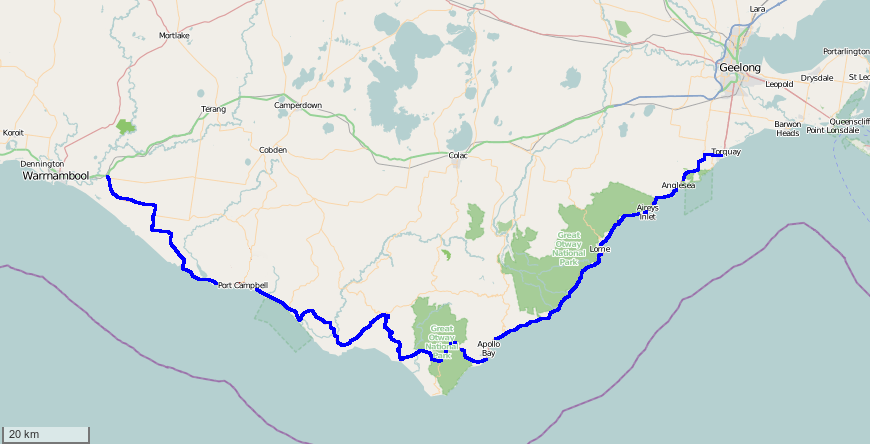
Map courtesy of Wikipedia
Our three-week rental is through Avis. I reserved a full-size car, but they were out and upgraded us to an SUV at no extra charge. One option was a Subaru. I have never driven a Subaru. I don’t think I’ve even ridden in one. After our tiny long-term rental, this thing feels enormous.
It’s also extremely high-tech and appears to require an advanced degree to operate. It beeps at me constantly for reasons I don’t fully understand. Still, it’s comfortable, quiet, and perfect for what lies ahead.
The Great Ocean Road was built between 1919 and 1932 by returning Australian soldiers under the leadership of Howard Hitchcock, then mayor of Geelong. Constructed almost entirely by hand, carved into cliffs and rainforest, it served both as paid employment for veterans and as a memorial to those who died in World War I. It is officially recognized as the world’s largest war memorial.
Reading the history, I couldn’t help but wonder how many soldiers survived the war only to lose their lives building a road along sheer cliffs. I also found myself pondering the wisdom of assigning traumatized veterans to dynamite duty. PTSD clearly wasn’t a concept yet.
After landing in Melbourne, we immediately headed southwest to Geelong. There, we stocked up on supplies—cooler, ice packs, water, snacks, and breakfast essentials for our AirBnBs—and took some time to explore the city.
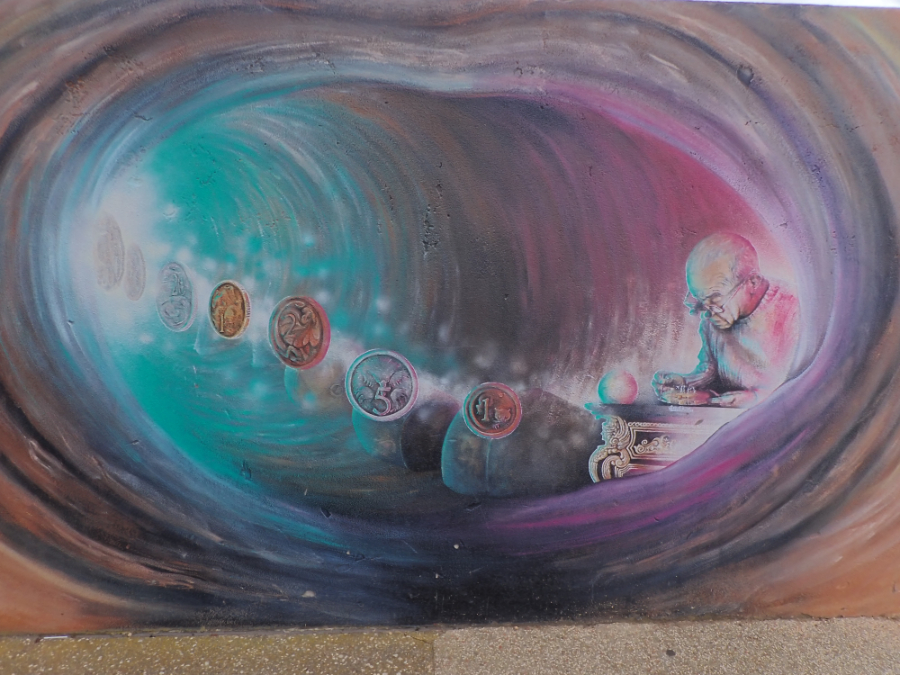
Over the years, we’ve developed a real appreciation for mural art. Some cities practically invite you to wander for hours hunting it down. Geelong turned out to be one of those places. The murals were fantastic, and well worth the time.
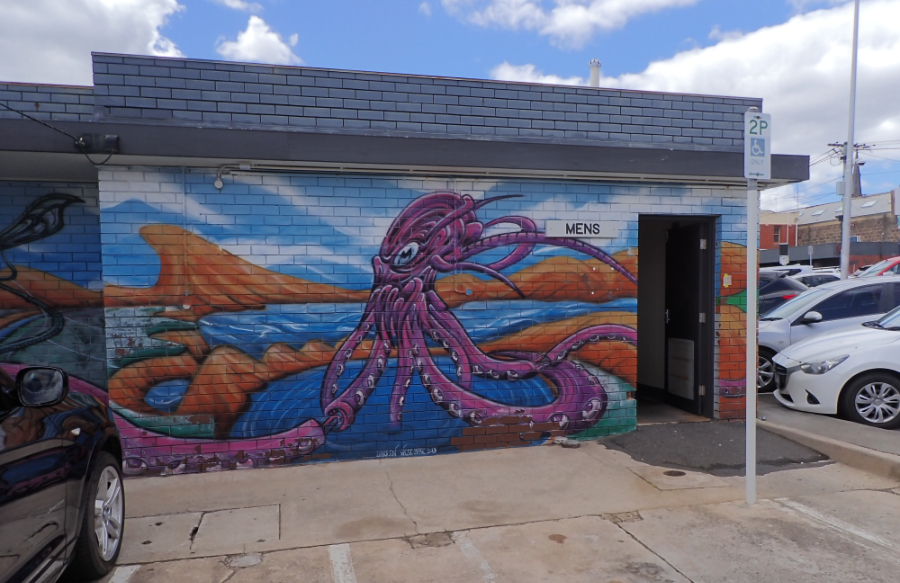
Believe it or not, this is a men’s toilet
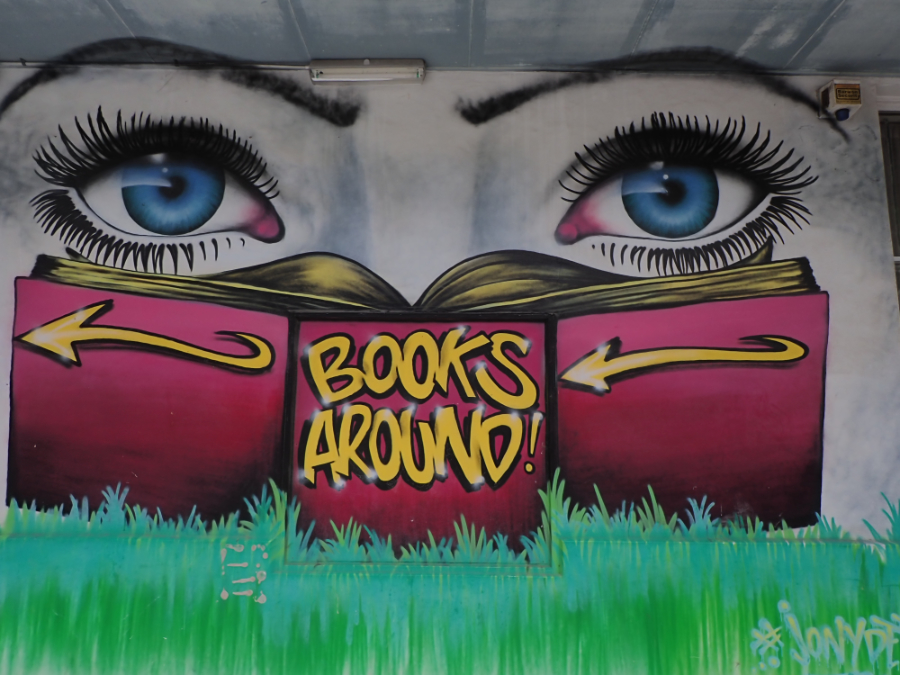
This one was massive – obviously on the side of a bookstore
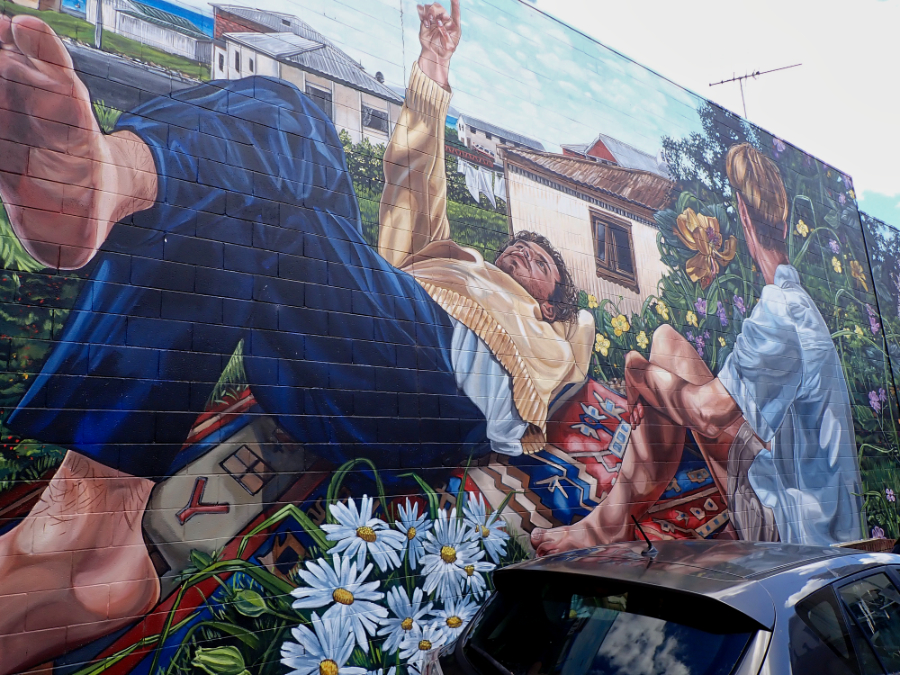
I love the 3D effect
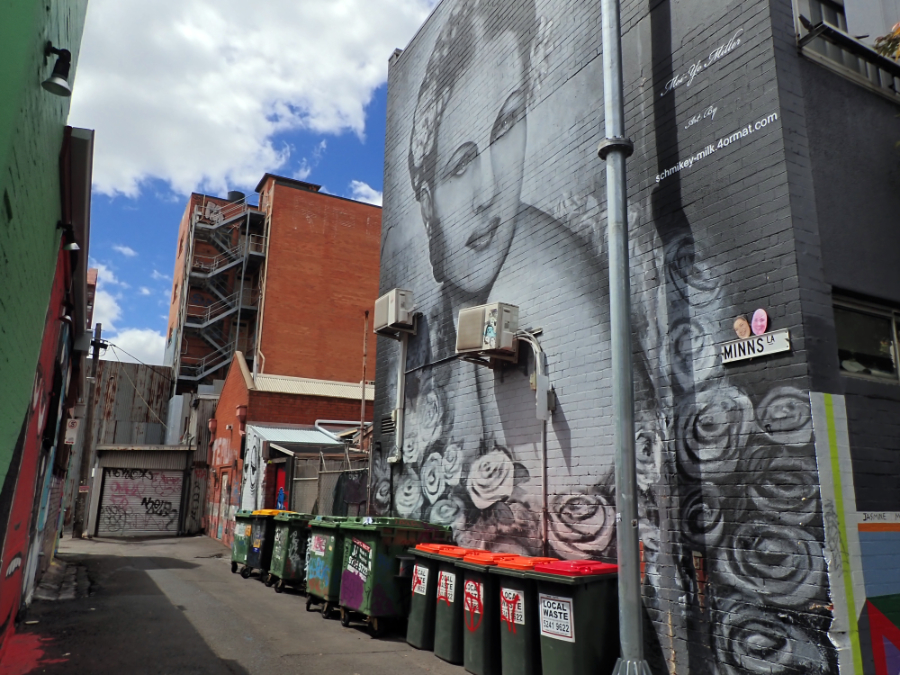
This wonderful painting turns an alley into a work of art
One thing I’ve come to love about Australia, and many other countries, is covered sidewalks in city centers. It’s summer here, and the sun can be brutal. Thankfully, the day we explored Geelong was overcast and lightly rainy. Cindy even broke out a pair of jeans.
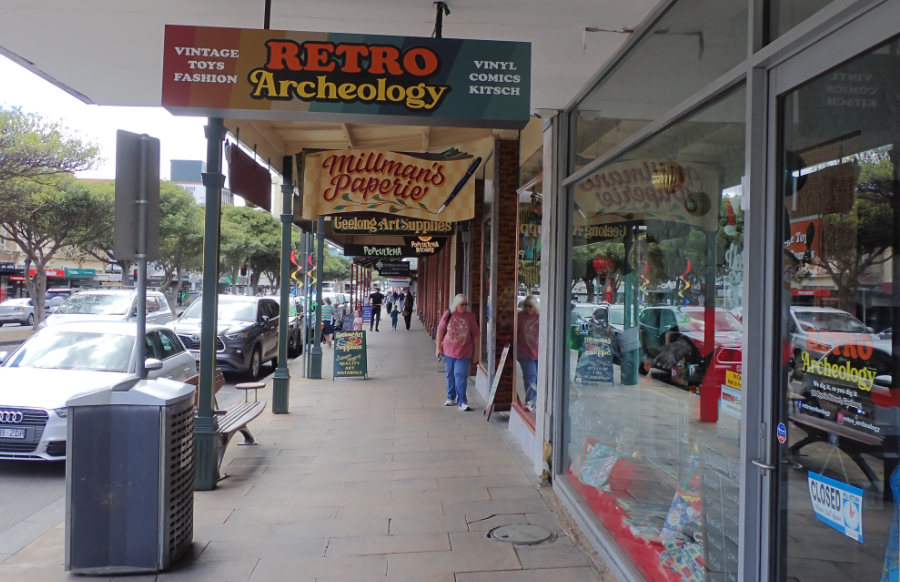
No matter the weather, the streets are walkable
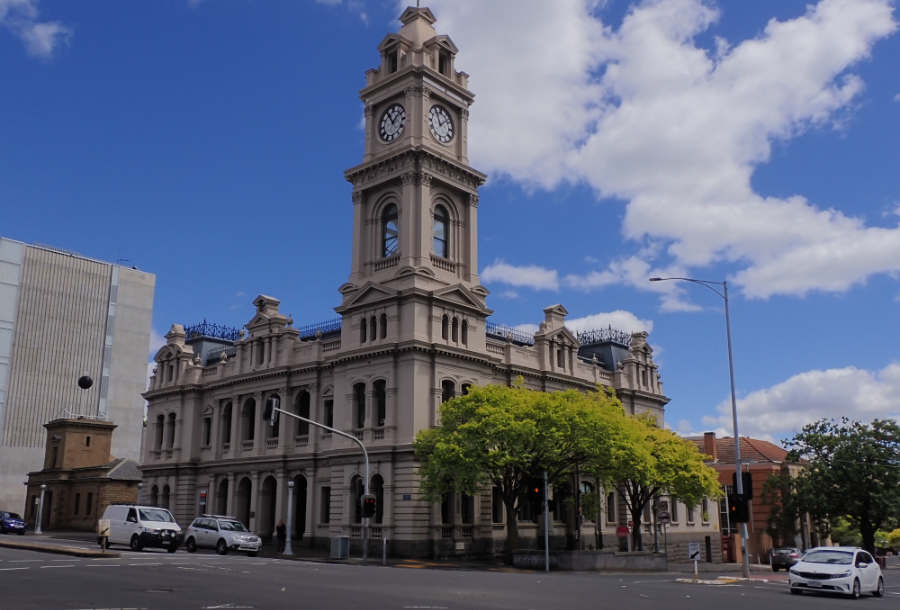
Geelong Post Office Building
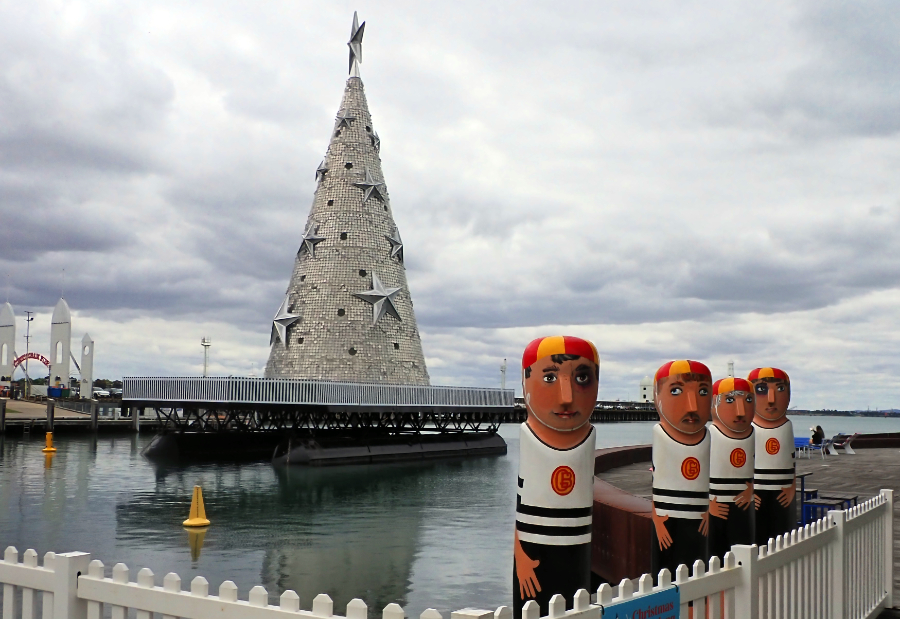
The Geelong Christmas tree
Last one – promise 🙂
Just outside Geelong is the Australian National Surfing Museum. Don’t rush to book a trip just for that. It was… fine. My interest in surfing only goes so far, given I don’t actually surf. That said, there was a 45-minute film on the history of surfing that was genuinely fascinating, full of “I had no idea” moments. Worth the small admission fee. A must-do? No. Worth a stop if you’re nearby? Absolutely.
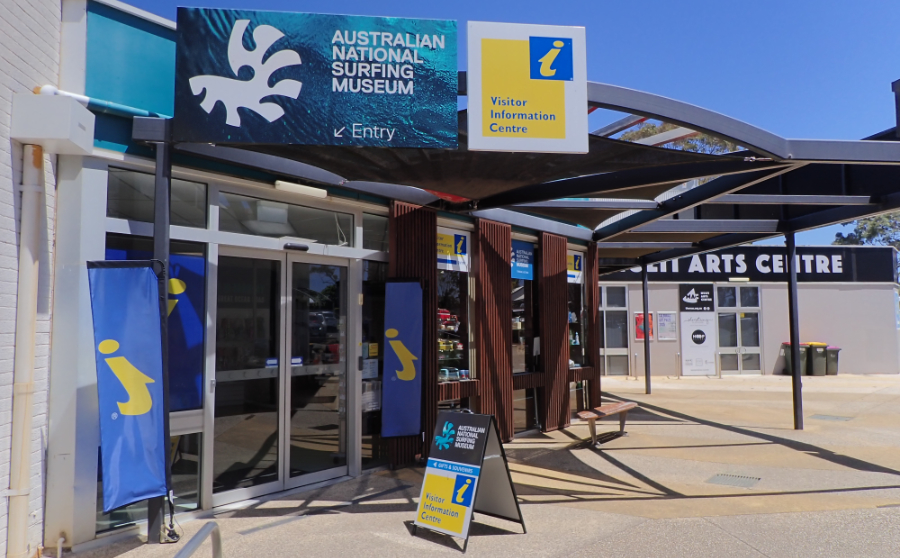
Welcome to the Australian National Surfing Museum
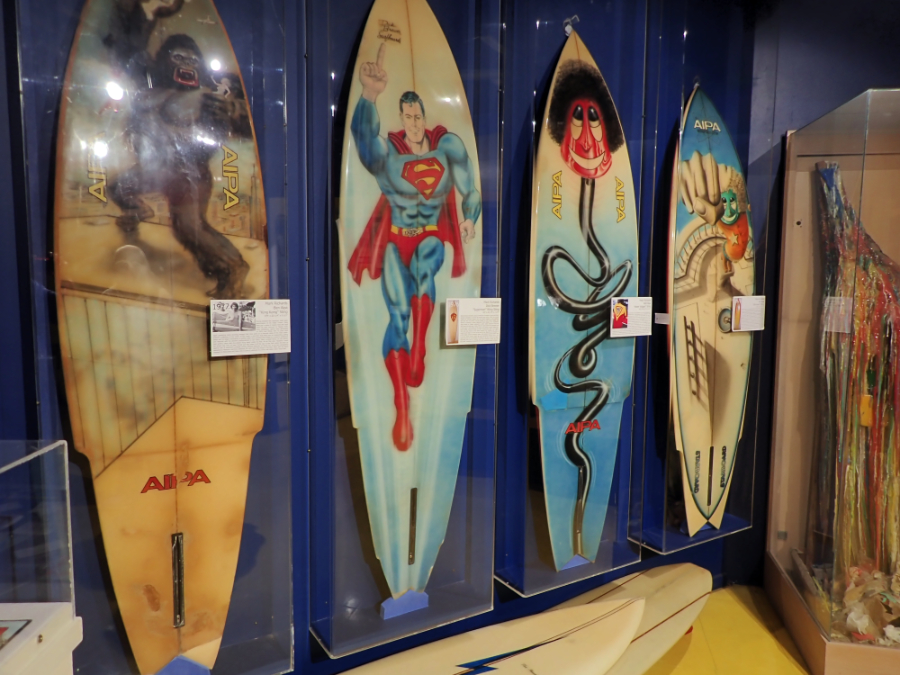
A sample of the many boards on display
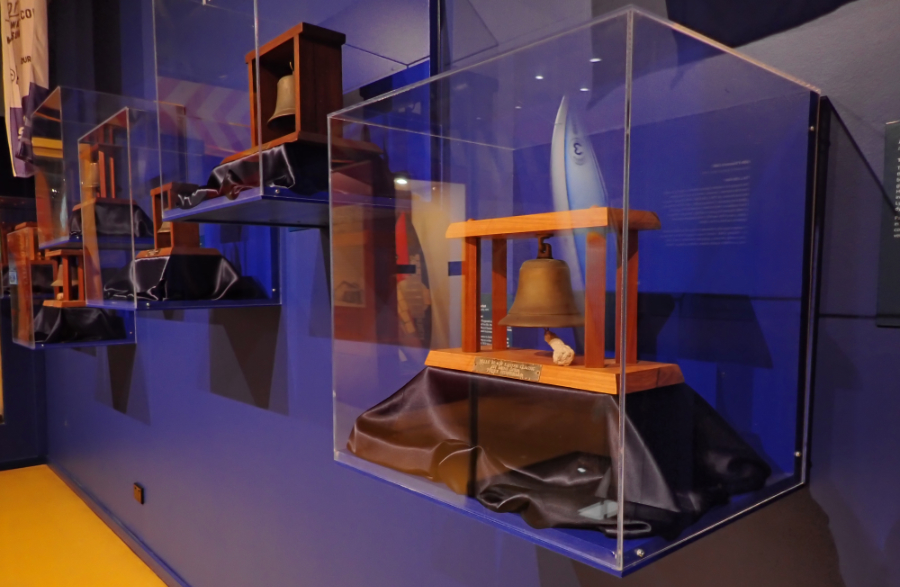
Bell’s trophies. If you are a surfer, you know how cherished these are
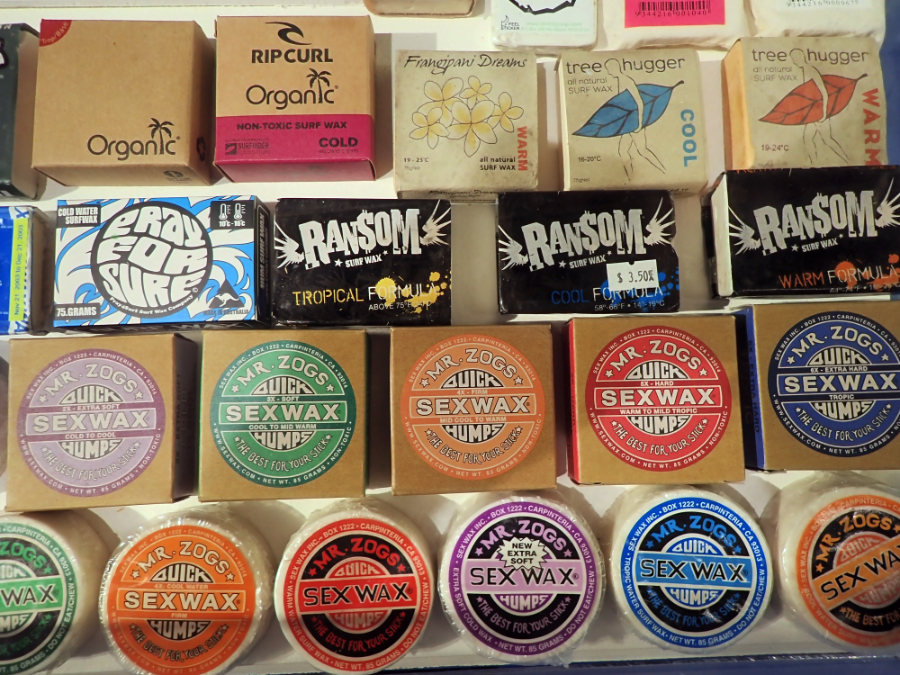
Sex Wax: the only time Australians talk about “performance enhancement” and mean surfboards.
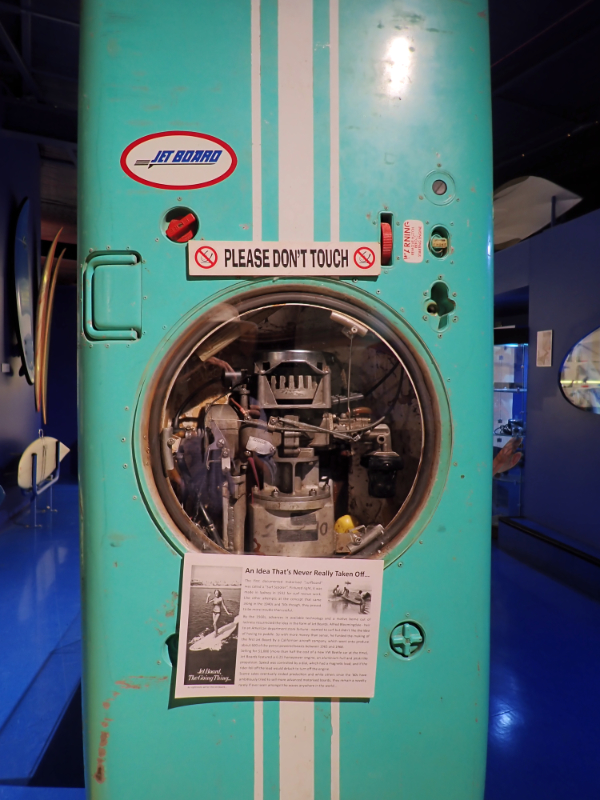
This is the engine inside a Surf Scooter – very rare. The next pic is the tag on it. I thought it was interesting.
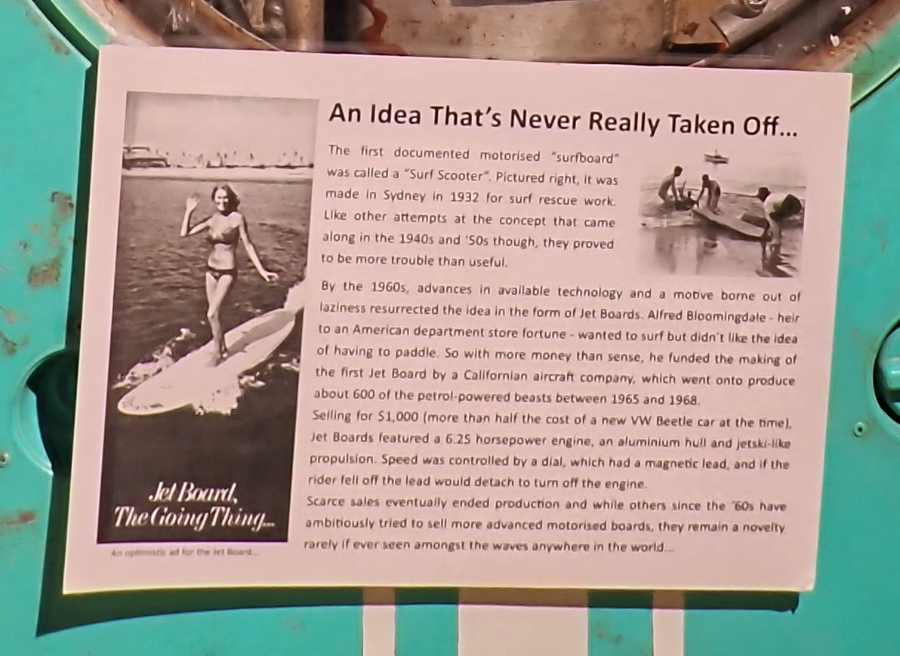
Hope you can read this.
And with that, I promised stunning pictures. Enjoy our journey along this spectacular stretch of coastline that no visitor to Australia should miss. I’m deeply grateful to our Aussie friends who insisted we do it. They were absolutely right. A must-do.
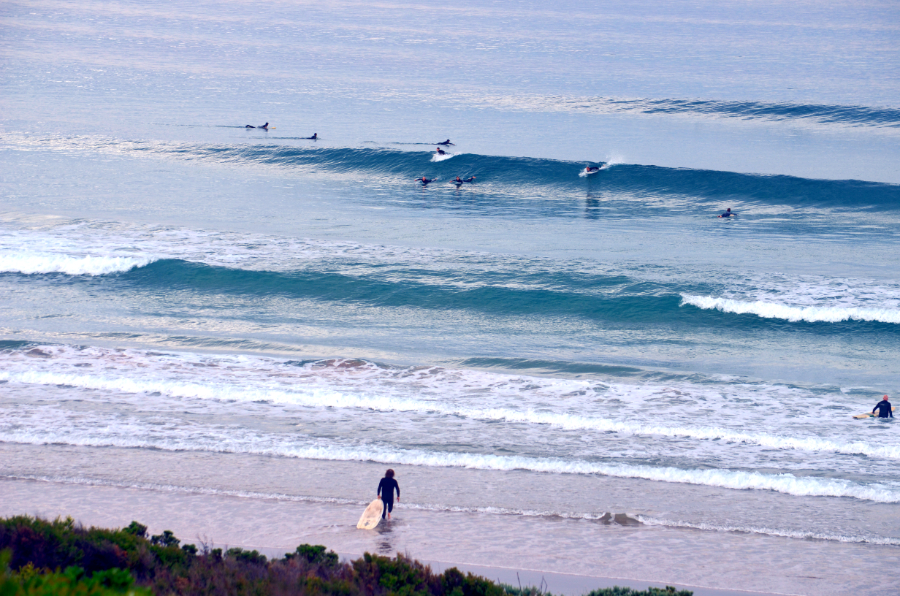
We begin at Bell’s Beach – it seemed appropriate after seeing Bell’s trophies
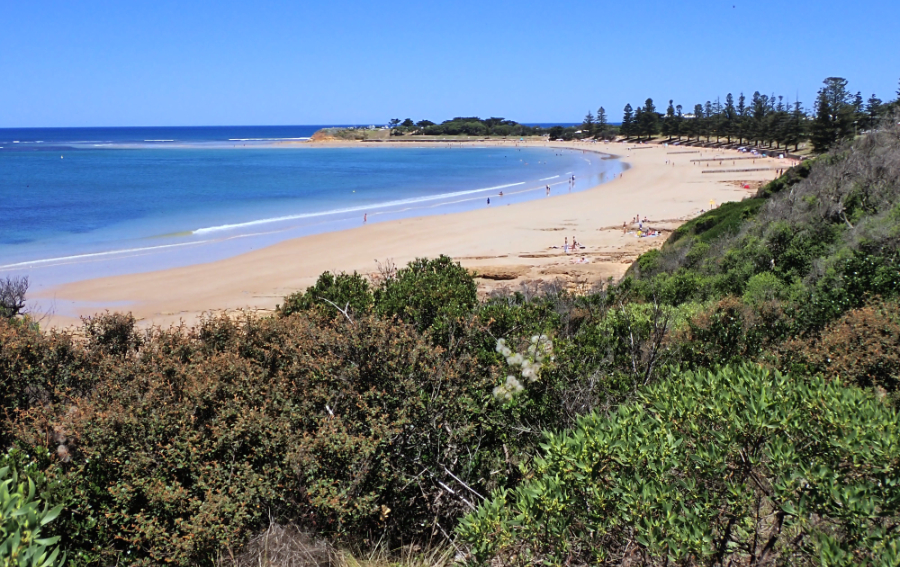
Bell’s Beach for the non-surfers

An area called the Twelve Apostles. Some have completely eroded. I think there are nine now (looking west)
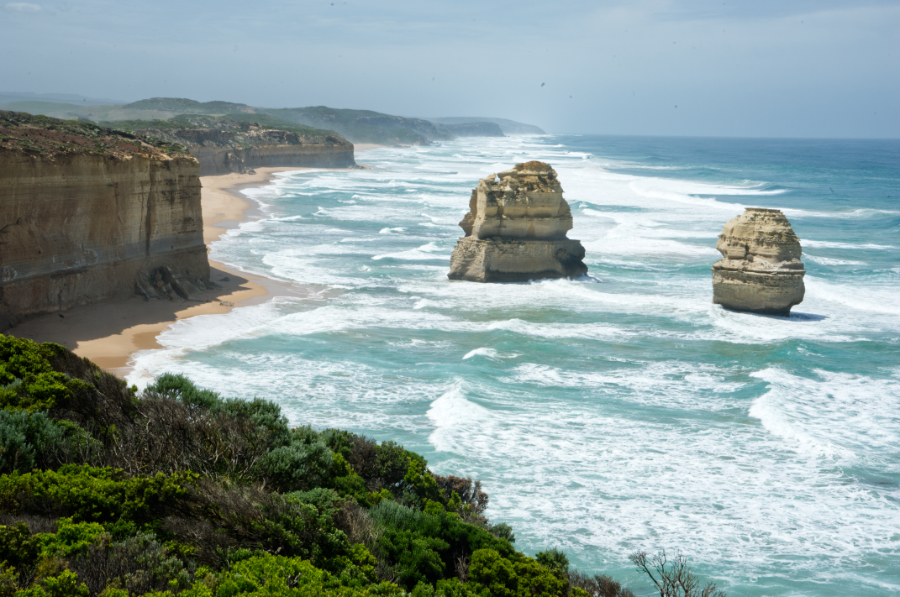
Looking east
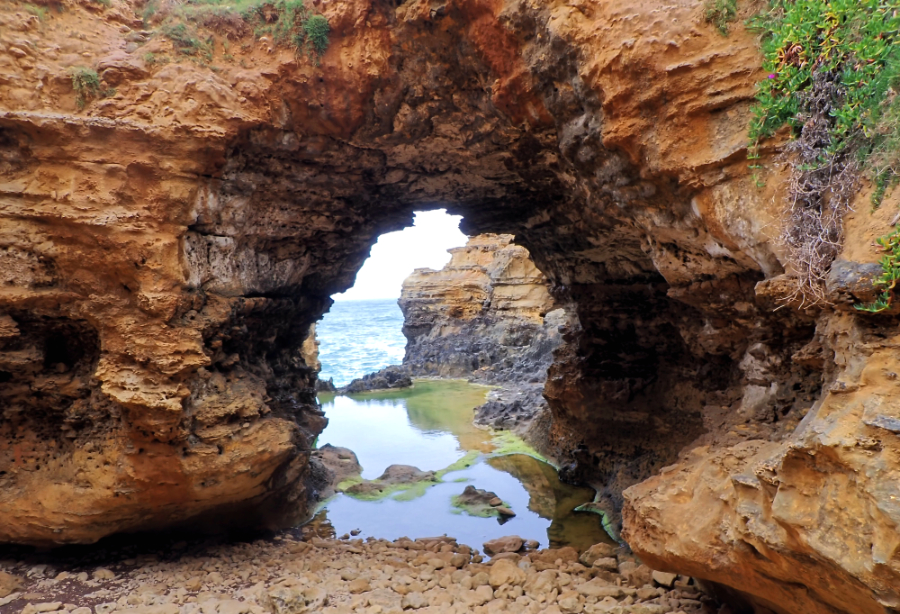
Archways form in the soft stone and eventually collapse – in a few hundred years
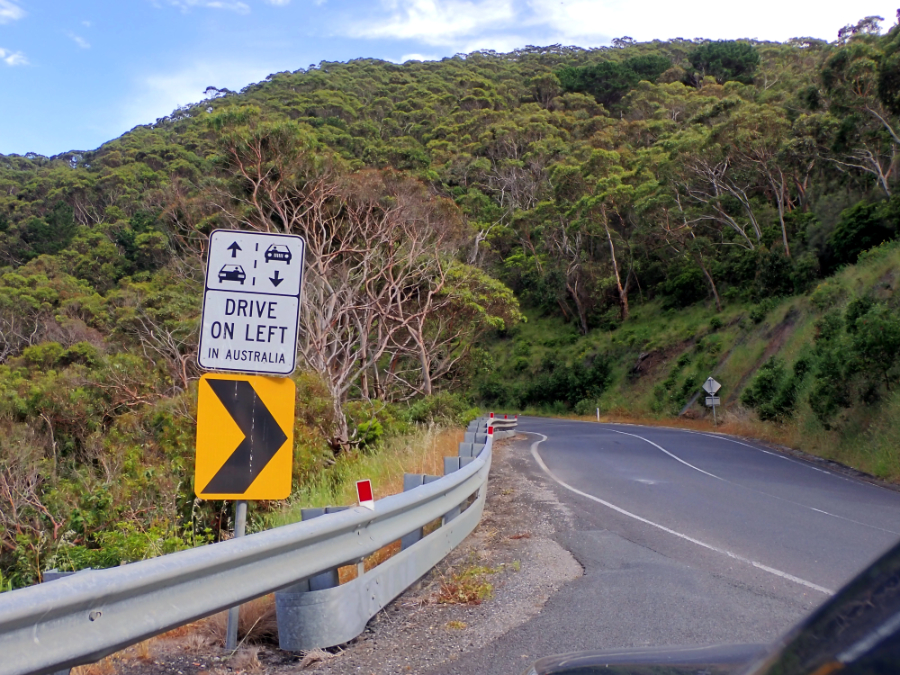
At every pull-off, a sign reminds visiting drivers to drive on the left – this is a big problem on this road, even with all the signs
We went for a walkabout on this beach. This is only possible during low tide. The water will come up to the base of the cliffs at high tide, and the beach disappears.
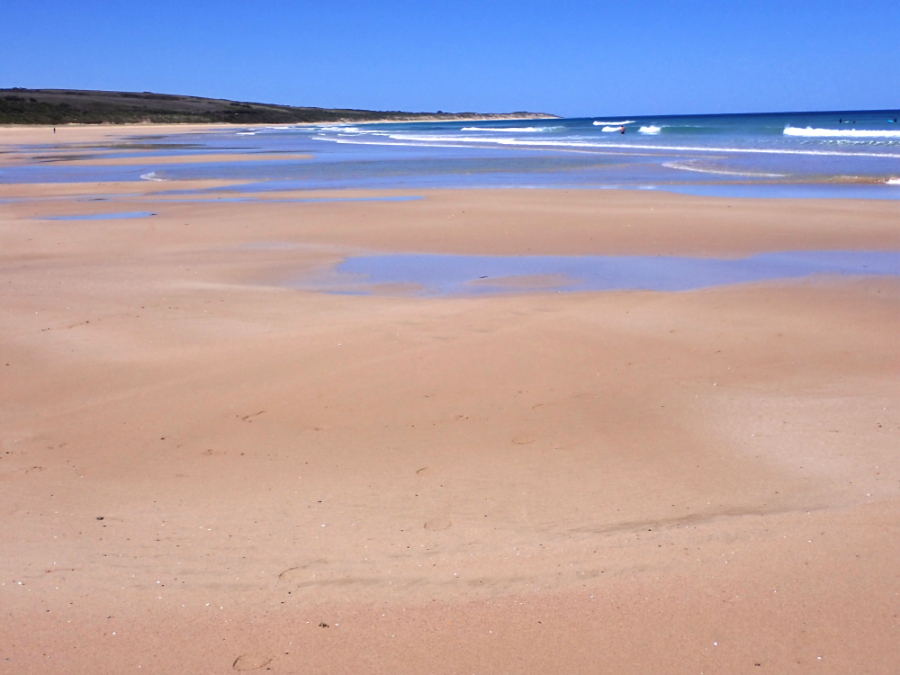
This end of the beach was hard sand.
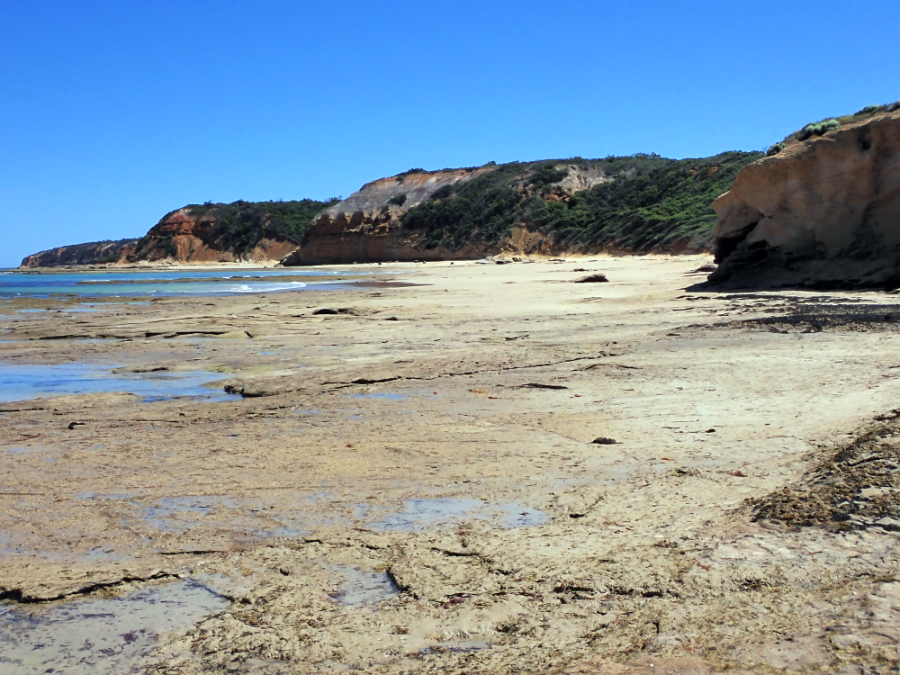
Going the other way, the tide was way out, and rock pools full of tiny fish were everywhere. You can only walk here when the tide is out – next pic explains
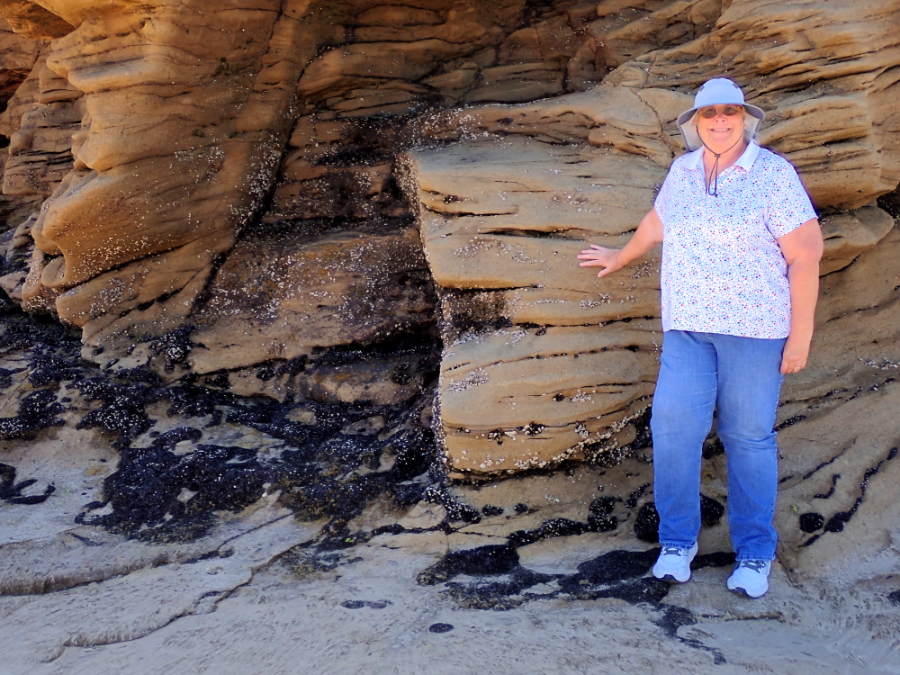
Cindy’s hand is at the high tide mark of one of the cliffs in the above picture

The rock colors are awesome
We took a break in Warrnambool. This is more or less the end of the Great Ocean Road—at least the tourist version of it. Most people use Apollo Bay as their overnight stop, but we found better AirBnB rates in Warrnambool, and it was far less touristy. It turned out to be a great decision.
Warrnambool itself was a pleasant surprise. It’s a proper working town rather than a tourist façade, with wide streets, good cafés, and a laid-back coastal feel. Everything was easy—parking, walking, eating—and it felt like a place people actually live, not just pass through. After days of scenic overload and tour buses, Warrnambool was a welcome exhale.
Cindy ducked into the visitor center to grab a map. Yes, we still use paper maps, especially on trips like this. Visitor centers tend to have the best ones, already marked with points of interest you’d never think to search for online. As usual, Cindy struck up a conversation with the woman behind the counter.
At some point, the lady unfolded Cindy’s map and began marking a few “special” places—spots the locals know about, but tourists usually miss. She warned us that the roads were narrow, often barely wide enough for one car, and to drive carefully.
OMG. The places she sent us to were incredible.
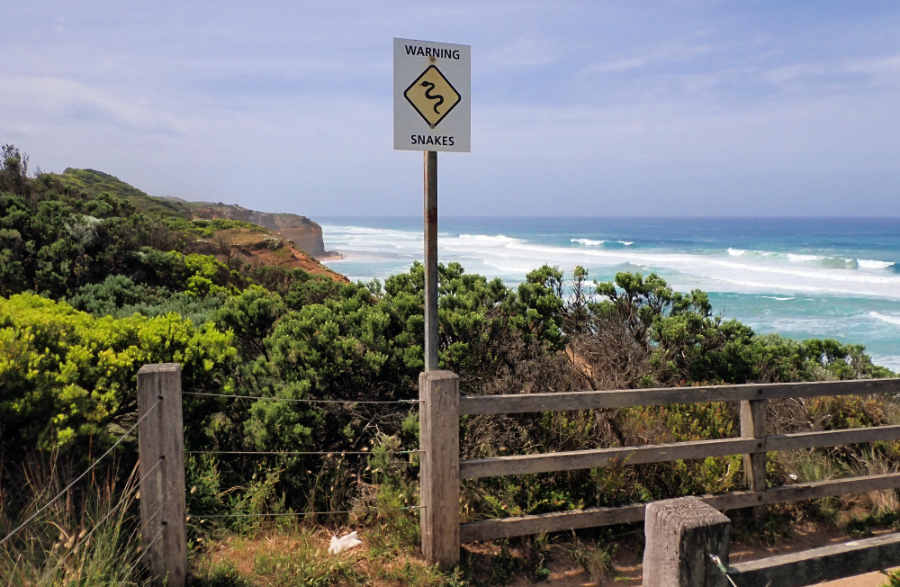
You don’t ignore signs like this in Australia – ever!
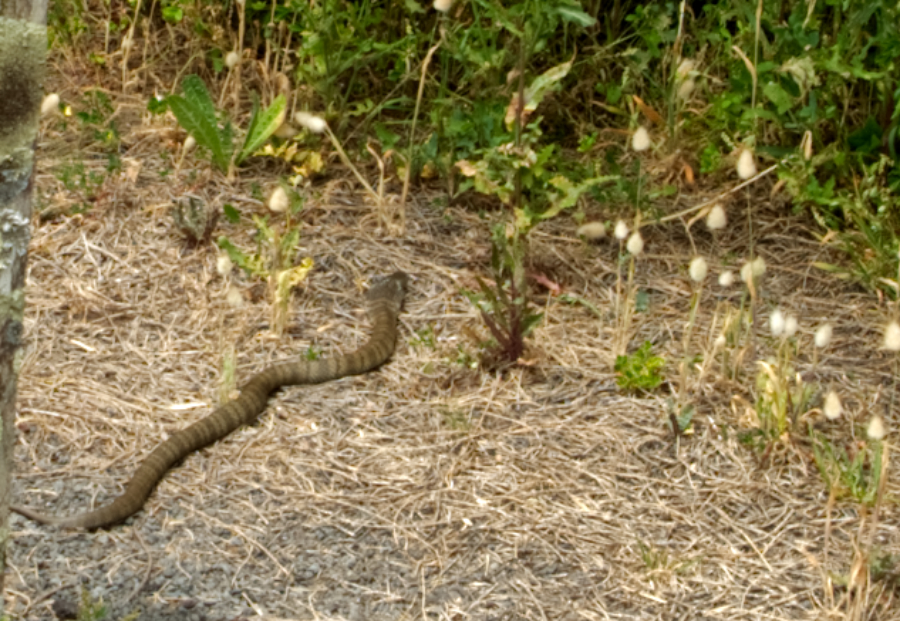
At our next stop, a Tiger Snake. If this bites you, you have a 50/50 chance of living unless you can quickly get to a hospital – and I mean quickly
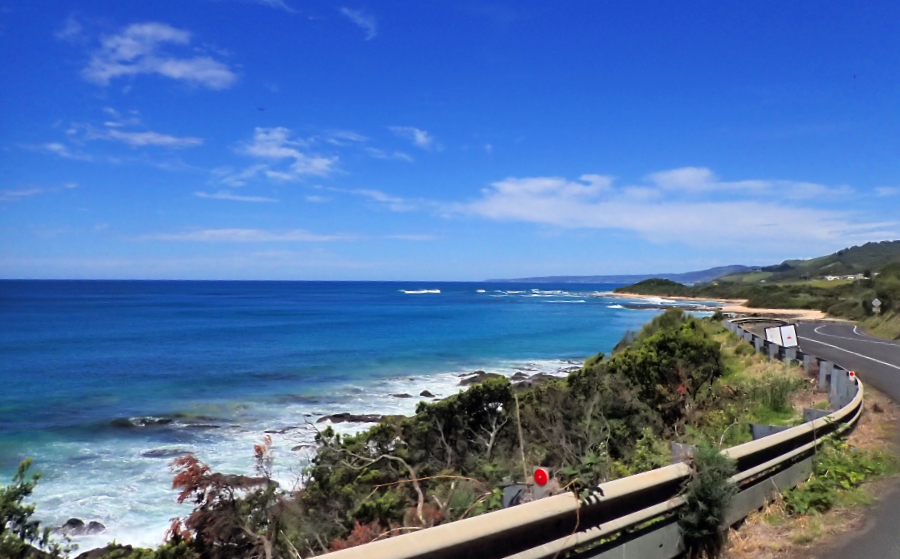
Finding our way off the beaten path
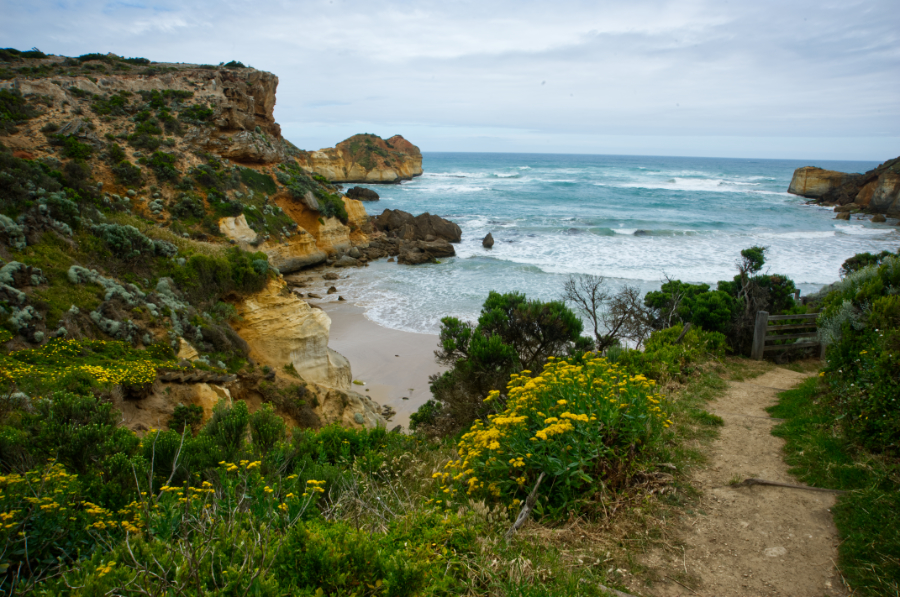
Wow! Right. A special secret place.
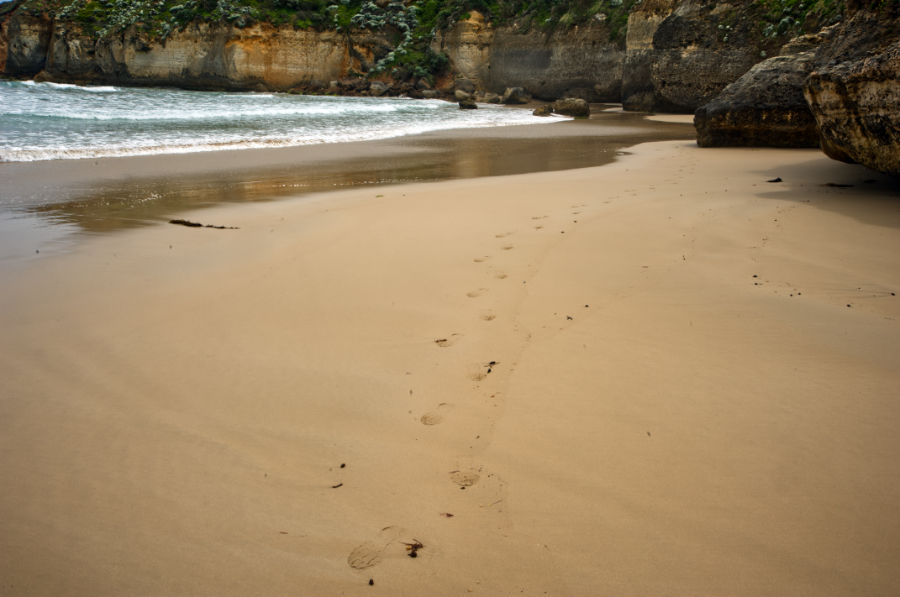
We followed the path down to the beach, and ours were the only footsteps in the sand that day
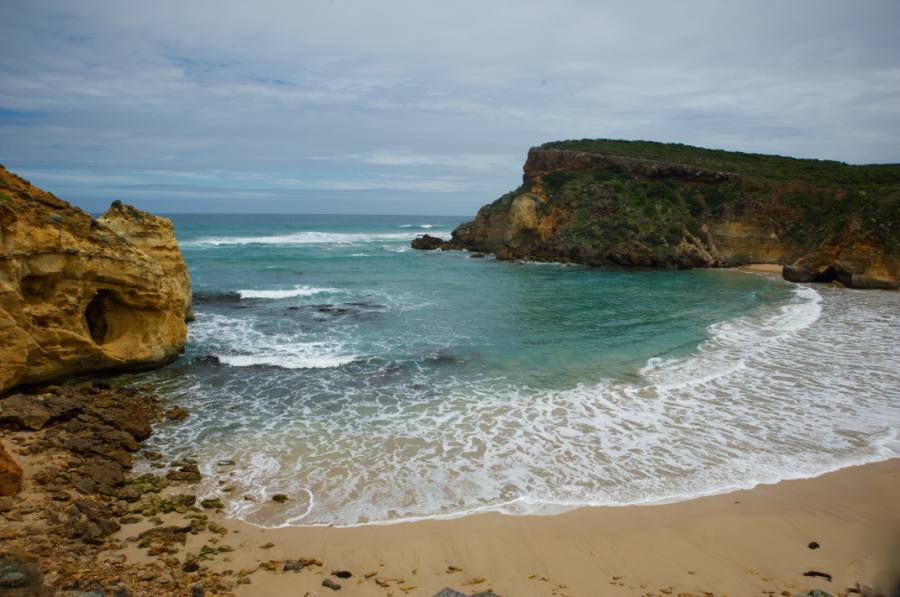
Another awesome secret beach
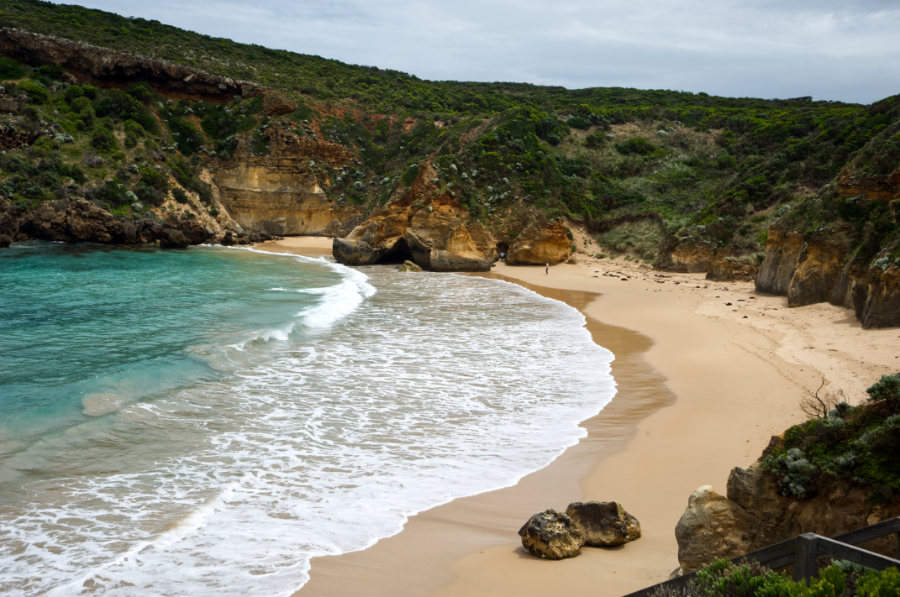
At the top of this secret beach is a private little cove. You have to wade in the surf to get there, but wow. What an awesome place to hang.
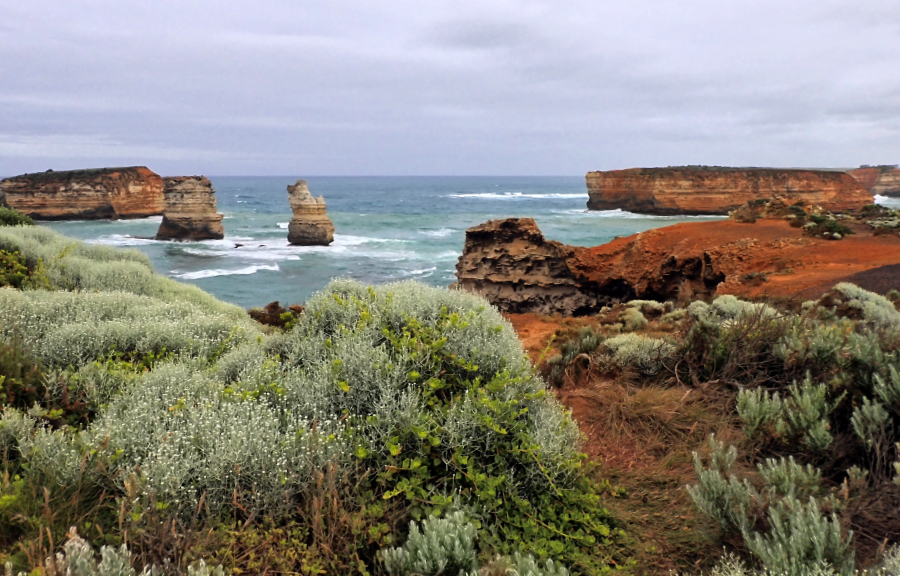
This is an area known as the Bay of Islands. On the day we went here, it was cold and windy
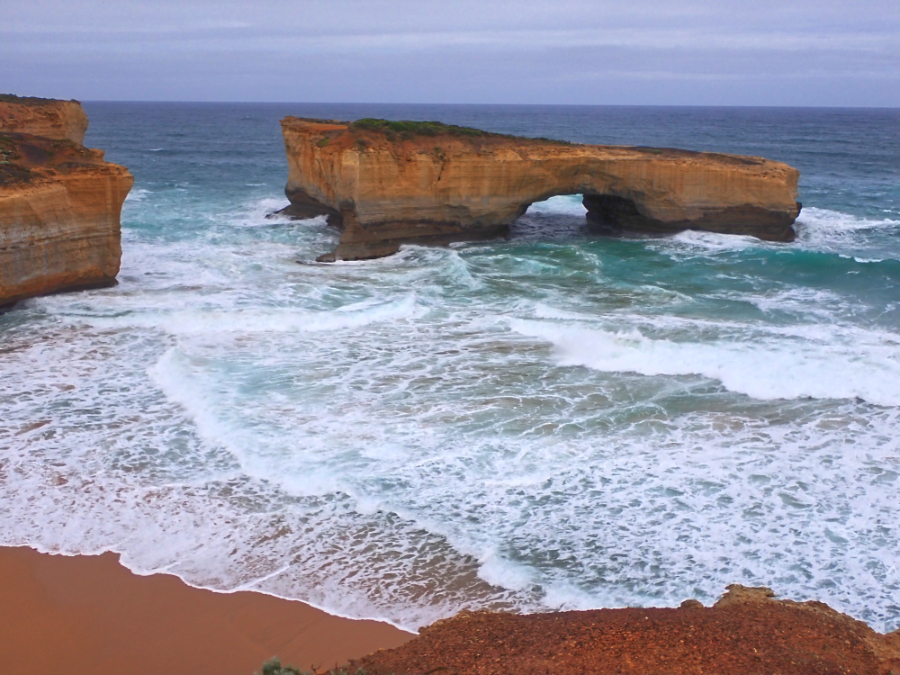
This rock is known as London Bridge. It used to be connected until one section collapsed. Just like the real London Bridge
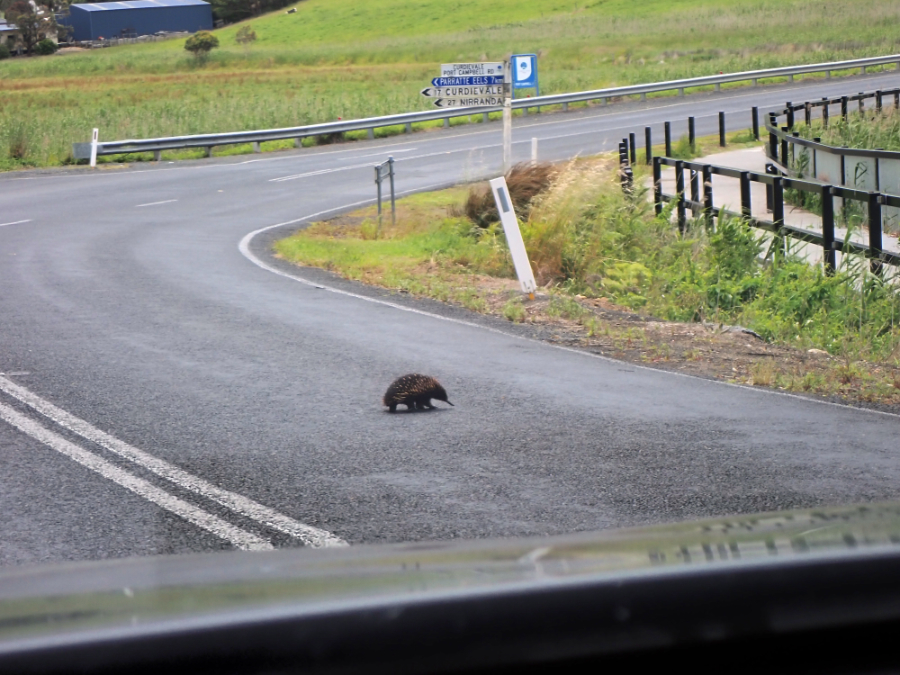
We held up traffic waiting for this echidna to cross the road – funny little things. It reminded me of hedgehogs in the UK
If you’ve made it this far reading this, Good on you. Your reward is a cute little story from Warrnambool.
While we were in the Warrnambool area, we kept hearing vague references to “the island with the dog.” This immediately caught my attention because it sounded like one of those stories that everyone seems to know, but no one can quite explain. Naturally, I assumed there was either a heroic dog, a dramatic rescue, or at least a plaque somewhere explaining what I was supposed to be impressed by. So we looked toward Merri Island, which sits just offshore, and… nothing. No dog. No monument. Just a quiet, windswept island full of birds doing bird things and looking entirely uninterested in human mythology.
As it turns out, the famous dog story isn’t actually about Merri Island at all. It belongs to Middle Island, which is right next door. That’s where the penguins were getting absolutely hammered by foxes sneaking across at low tide (people are not allowed there). Instead of building more fences or writing more reports, someone had the inspired idea of putting a very large, very serious sheepdog on guard duty. Enter the Maremma dogs. They scared off the foxes, the penguins recovered, and everyone lived happily ever after. The story became so successful it was turned into a movie called Oddball, because of course it was. Somewhere along the way, Merri Island got incorrectly promoted to “dog island” status. Wrong island, right dog, great story and a reminder that sometimes the most effective conservation plan is just hiring a dog and letting it do its thing.
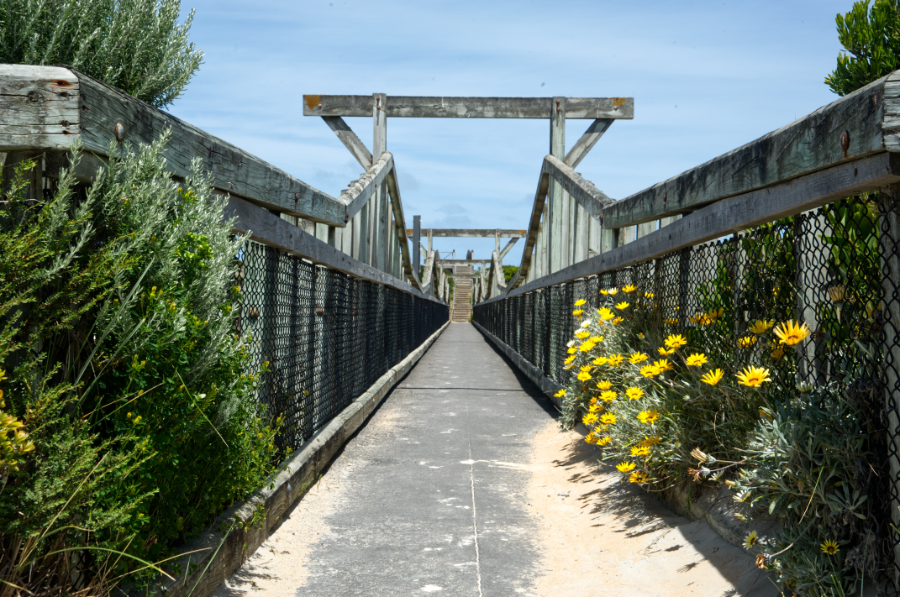
Merri Bridge to Pickering Point
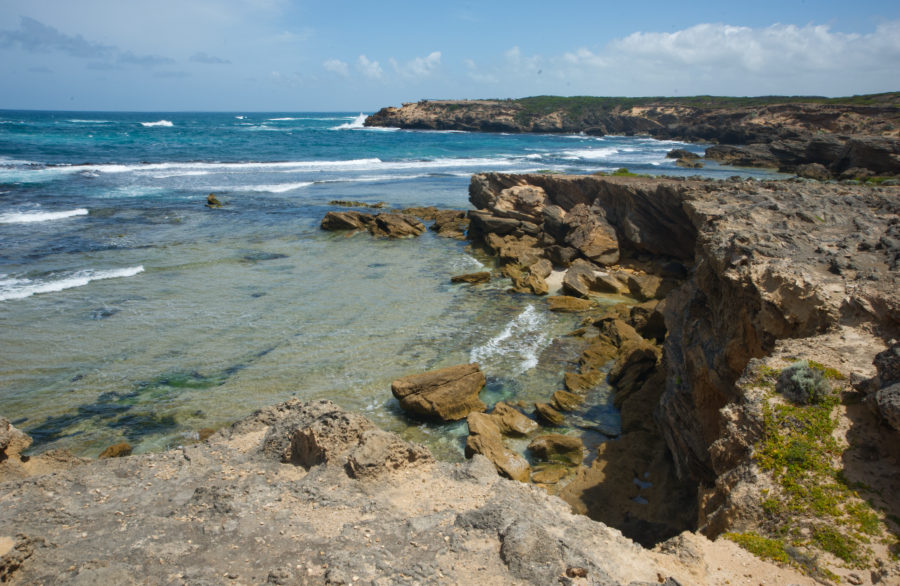
Pickering Point
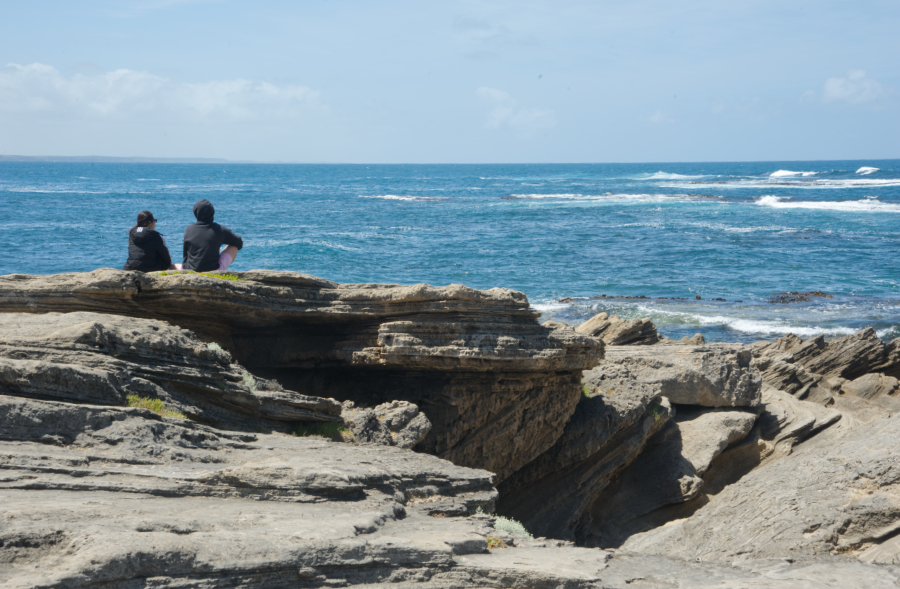
A couple taking a moment of zen just outside the Warrnambool Harbour near Pickering Point
When we pick this back up in the next post, we continue west to Adelaide and then to an opal mine in the outback. More to come soon.
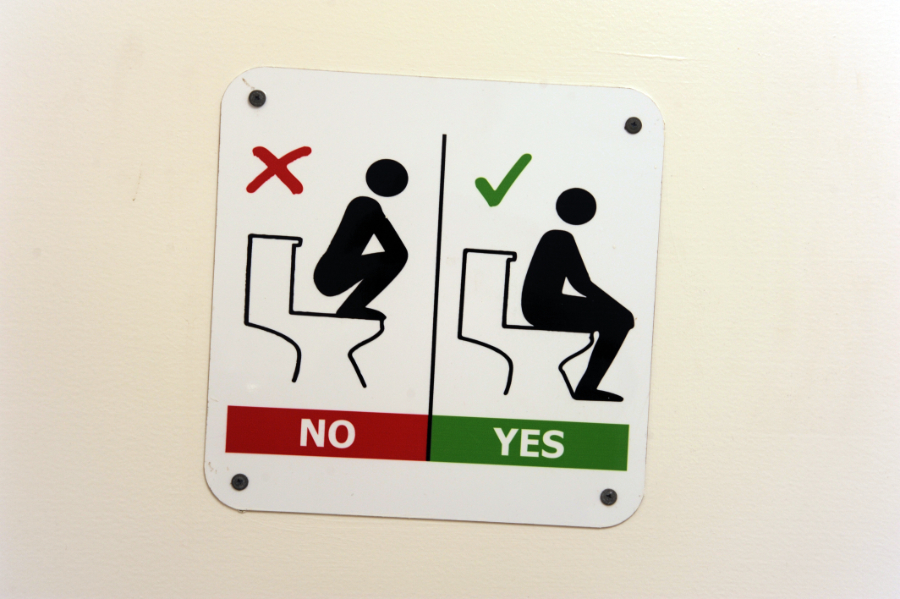
Sign in a public toilet. Just in case you were wondering how to use it.