When Cindy and I first started on this wacky adventure, we both hoped that one day we’d pull into a port and think to ourselves, we should make this home. This happened after 11 years of sailing and landing in Australia. But alas, Australia has zero programs that provide a path to citizenship for retired people, unless you are extremely wealthy. So, we had to leave.
Leaving was hard. Not because the country is stunning and the lifestyle is awesome, but because of the friends we made while there. This is a strong warning to anyone considering a nomad lifestyle, regardless of the method of transportation: nothing will prepare you for the sadness of leaving good friends behind. And, it will be harder than you imagine.
 Before I go any further, I think I need to define how I define a friend. It isn’t a person on Facebook who likes my posts or follows me. It isn’t a person we have run into during our travels who touches base once in a while to let you know what is going on in ‘their’ life. It isn’t the people we meet repeatedly at anchorages around the globe because we are all generally heading in the same direction. These are nice to have, but they are not true friends. They are acquaintances. Then, what is a true friend?
A friend to us is a person who genuinely cares about our lives and shares their own experiences, focusing on the things they know will amuse or interest us. There is an unwritten understanding that if anyone needs some help with something, the other will drop everything to be there. It is a person who just likes to be with you even if they don’t have much to say.
A true friend doesn’t keep score, doesn’t disappear when life gets difficult, and doesn’t only show up when it’s convenient or when they need something. They celebrate your successes without jealousy, tell you the truth even when it’s uncomfortable, and stand beside you when the rest of the world walks away. A friend will make you laugh and add to a life rather than take away from it. As the proverb says, “Show me a man with many friends, and I’ll show you a rich man.”
Good friends are a rarity. They are one of life’s greatest treasures, often appearing when least expected and becoming part of our story in ways we never imagined. The older we get, the more we realize that friendship is not about the number of people in our lives, but about the handful whose presence makes life better simply because they are in it. Being in Australia was a stark reminder of this.
We met some Aussies, not just one or two, who I know will be part of our lives from this point on. Regardless of the fact that their government won’t let us live in Australia, friendships don’t require visas. I’m quite certain there will be future dinners, future drinks, future lies disguised as sea stories, and more than a few reunions somewhere down the road.
Cindy nailed it when she said these people have renewed her faith in humanity. We both will truly treasure our time in Australia and will be eternally grateful to the people we crossed paths with there. Along the way, we found kindness, generosity, laughter, and friendships that we know will endure long after we’ve sailed away. Countries are remembered for their landscapes and landmarks, of which Australia has many we enjoyed. But it’s the people who leave the deepest and most lasting impression. Australia gave us far more than places to visit; it gave us people we’ll be proud to call friends for the rest of our lives. Having to say goodbye hurts. Really hurts.
Cream Puff pulled out of the slip in Scarborough Marina at first light on June 1st. At six o’clock in the chilly morning, four of our closest friends stood on the pier to say farewell and wish us a safe journey. Remember what I just said about friends? How many people do you know who would come to wish you well at a wee morning hour – long before God is awake?
One of them shared a short video of us leaving. If you don’t see it below, click here
From the marina, we were required to clear out with Customs and Immigration. This meant a journey of four hours in the wrong direction and back again. We traveled up the Brisbane River to Rivergate Marina for clearance. I wish I could say this went smoothly.
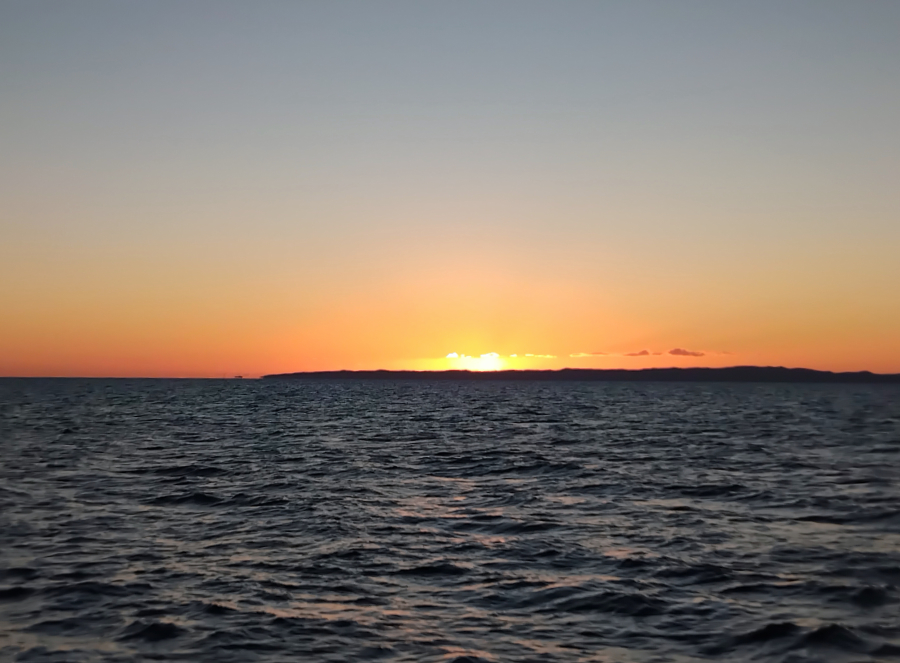
Our last sunrise in Australia as we head south to the Brisbane River on Morton Bay to process out with customs
The first shock was the price of diesel. OMG! I guess I can thank Donald Trump and his idiotic war, along with Aussie taxes, for a diesel price of US$7.70 per U.S. gallon. This is, by far, the most we’ve ever paid for fuel. And, we’ve topped off in some very isolated places. Topping off tanks that were only about half full cost us about US$800. Ouch!
The next shock didn’t surprise me. It was a comment made by the Australian Border Force (ABF) officer while reviewing Cindy’s USA passport (I travel on my UK passport). He made a statement basically saying that perhaps the USA will be nicer to the rest of the world once Trump is no longer president. Even though I agree with his statement, it was over-the-top unprofessional and extremely out of line.
I was putting the gold-plated diesel into the tanks while Cindy dealt with the officials. Had I heard this comment, I would have given the dickhead (a great Australian term we learned) a piece of my mind. This is mostly why Cindy deals with officials and I don’t. No doubt our departure would have been seriously delayed after an outburst from me toward the ABF.
Once all the formalities were completed, the ABF got off the boat, but not before they told us that we must leave Australia immediately. They emphasized the word ‘immediately’. We could not stop anywhere. If we had an emergency, we were to immediately contact them. There’s that word again. I love how they assume we can call on a cell phone from our boat or send an email from the ocean. Cindy and I agreed, but both thought that if we did have an emergency, we’d deal with that first and then perhaps later try to contact the ABF via radio.
Now comes the funny part. They told the dockmaster they had completed our clearance and instructed him to stand on the fuel dock to make sure we departed immediately. And, there it is again. I say this is funny because of what I am about to tell you about clearing into New Caledonia.
We used Chris Parker’s weather services to help with a weather window to get to New Caledonia. For the most part, this is like sailing uphill. It is rare to have winds with a westerly component for the five to six days needed for the sail. When the winds do shift from the normal easterlies, it is because of a large system. These systems can often bring sporty sailing conditions. We don’t care much for sporty sailing.
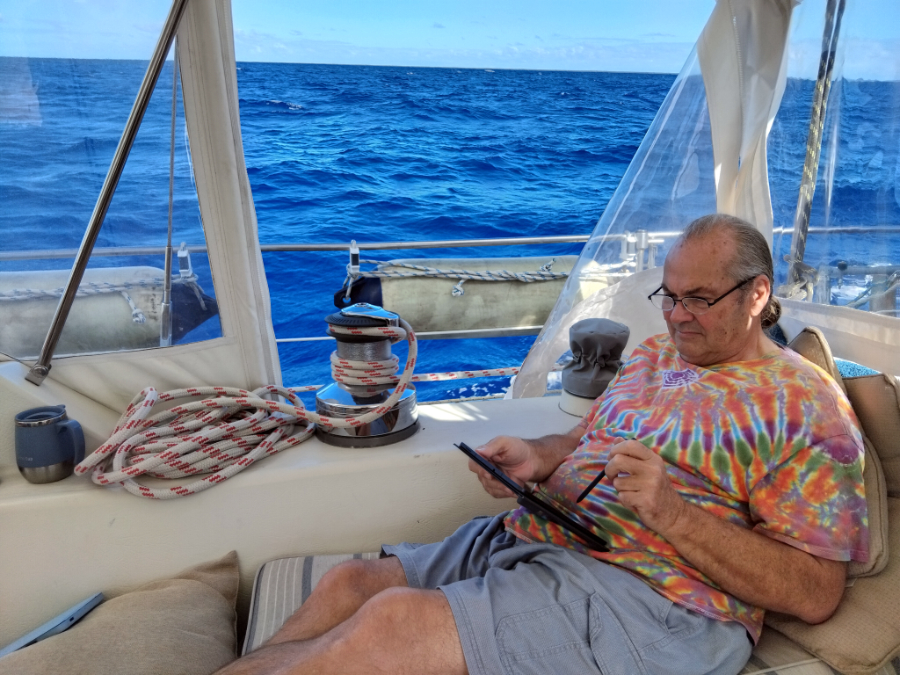
Once underway, we are able to kick back and play games on our tablets. Smooth sailing can be enjoyable
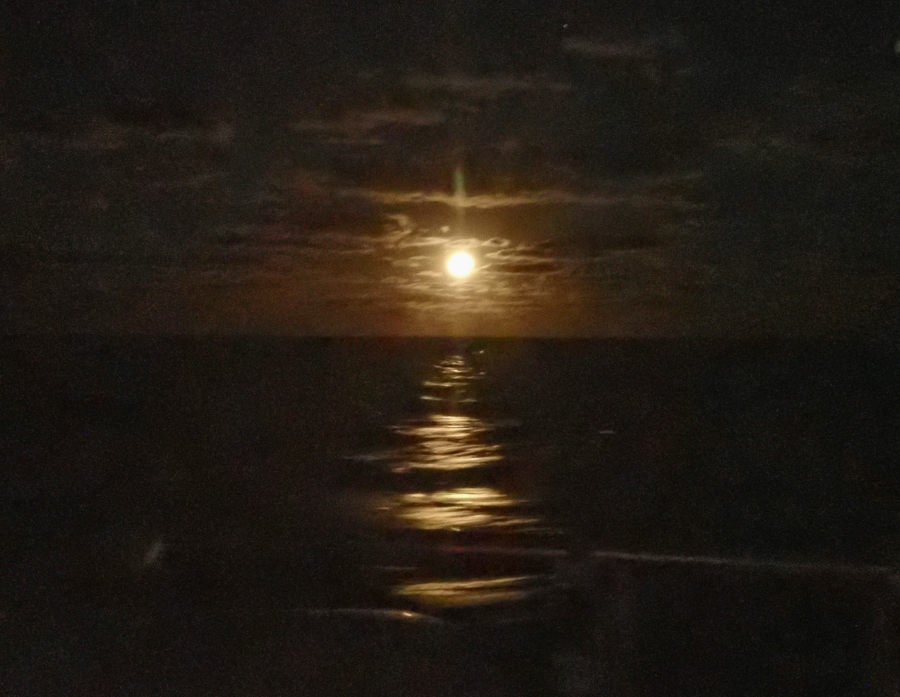
Full moon rising shortly after sunset. We were blessed to have mostly clear skies and a big moon to see at night
On the passage, one night Cindy was on watch while I slept, she said she thought it rained a little. When I took over, I also thought I heard some rain. But, how can this be? The sky is clear and millions of stars are out. It turns out that Cream Puff was used for a ride by a flock of birds who made themselves at home in the rigging. You guessed it. The rain we heard was bird droppings. In the morning, we discovered our boat was covered in crap. Add the flying fish that landed on the Puffster during the night, and it made for quite a cleanup the next day.
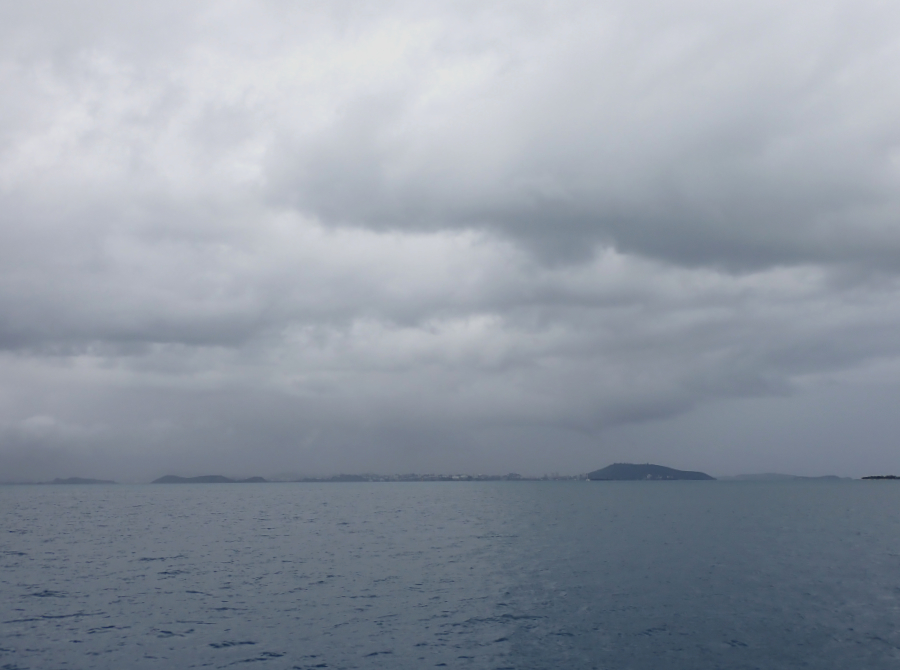
Land! It is about this point that I get relaxed and sense that we are actually going to make. I stop the worries that come with passage making
As usual, Parker’s team nailed it for us. They pushed us northward initially (about 100 nautical miles) to minimize the front we rode throughout the trip. The sail was one of the best passages we’ve had. Winds remained 15-20 knots on the hind quarter of Cream Puff, pushing us at about 7-8 knots in relatively calm seas. We even lucked out with a full moon and clear skies for most of the night hours.
Because the conditions were this way, it meant we got plenty of sleep and ate well for the six days it took to get here. We arrived in New Caledonia on a Saturday afternoon. We actually had to slow down a bit to make sure we docked in Port Moselle after lunch hours. Within a few minutes, Biosecurity arrived.
In Australia, Biosecurity is a self-funding government entity. Boaters pay by the quarter hour while the inspector is aboard. Boats also get hit with trash fees. These can add up quickly. Cindy is extremely buttoned up on this stuff, and we are 100% compliant with the rules. Even with this, the Aussie agent took 45 minutes. It is in their best interest not to hurry since this is how their department makes money for their paychecks.
By comparison, the New Caledonian agent was aboard for less than 10 minutes. The visit entailed a look over the paperwork, a brief inspection of our fridge and freezers, and answering a few questions. Since our trash was just plastics, there was no interest in it from the agent (all organics go over the side during the journey).
Now comes customs and immigration. Like most countries, forms are sent ahead of time. In New Caledonia, we use an agent to assist. She is worth her weight in gold. Because of her, agents don’t come to the boat like they do in Australia or New Zealand, where you are literally held behind locked gates until they arrive.
As I said, we arrived on a Saturday. These New Caledonian government offices are closed on weekends. They had our pre-submitted paperwork, so if there had been a problem, we would have already heard about it. Therefore, we were not restricted to the boat. They do not lock us up just because their office is closed.
On Sunday morning, we went to the market near the port and shopped for fresh vegetables and fruit. And, you guessed it, because we are on a French island, we also got a baguette, croissants, and a couple of pastries. OMG—French bread is to die for.
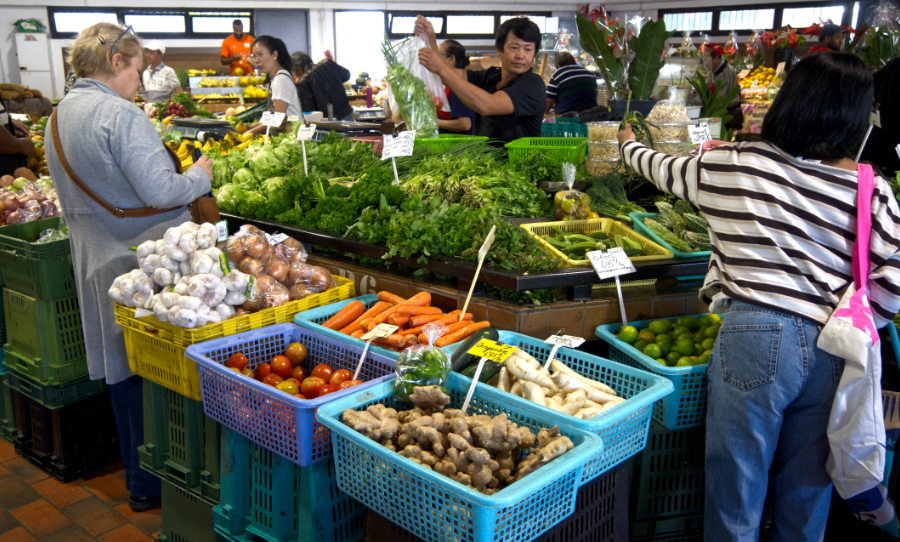
Nouméa Market – New Caledonia
Monday morning, our agent met us at the boat and collected our papers and passports. In less than half a day, we were fully cleared into the country.
Leaving New Caledonia is just as easy, although there still is a checkout process. It is nothing like the process of leaving Australia. I would be remiss if I didn’t mention that some countries have even easier options or may not require you to check out in person at all.
Over the years, we have checked in and out of dozens of countries, and some seem to understand that cruising sailors are visitors who bring money, goodwill, and very little trouble. The best systems are simple, efficient, and respectful of everyone’s time. They recognize that compliance is encouraged when the process is straightforward, not when it becomes a bureaucratic obstacle course.
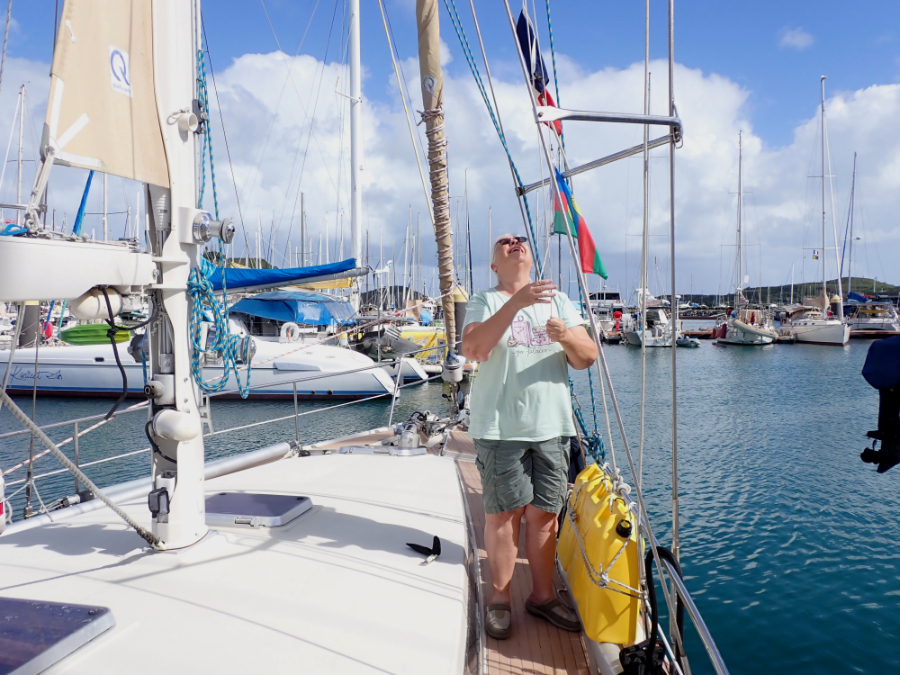
Cindy has the honor of raising the courtesy flags. This means we are officially cleared. This is when she finally becomes relaxed.
As we sit here in New Caledonia, preparing for the next chapter, I find myself thinking less about the miles behind us and more about the people we met along the way. Australia may not have allowed us to stay, but it gave us something far more valuable than a visa ever could. It gave us friendships that will outlast our time there.
The cruising lifestyle teaches you that every arrival eventually becomes a departure. Boats move on, seasons change, and horizons call. That is simply part of the deal. What nobody tells you is that the hardest part isn’t leaving a country. It’s leaving the people who made that place feel like home.
Fortunately, the best friendships don’t end at the dock. They travel with you. They survive oceans, time zones, and long periods apart. And if there is one thing Cindy and I know for certain, it is that somewhere down the road, there will be more dinners, more drinks, more sea stories, and more laughter with the friends we leave behind today.
For now, Cream Puff sails on. The adventure continues. But a small piece of our hearts will always remain in Australia.
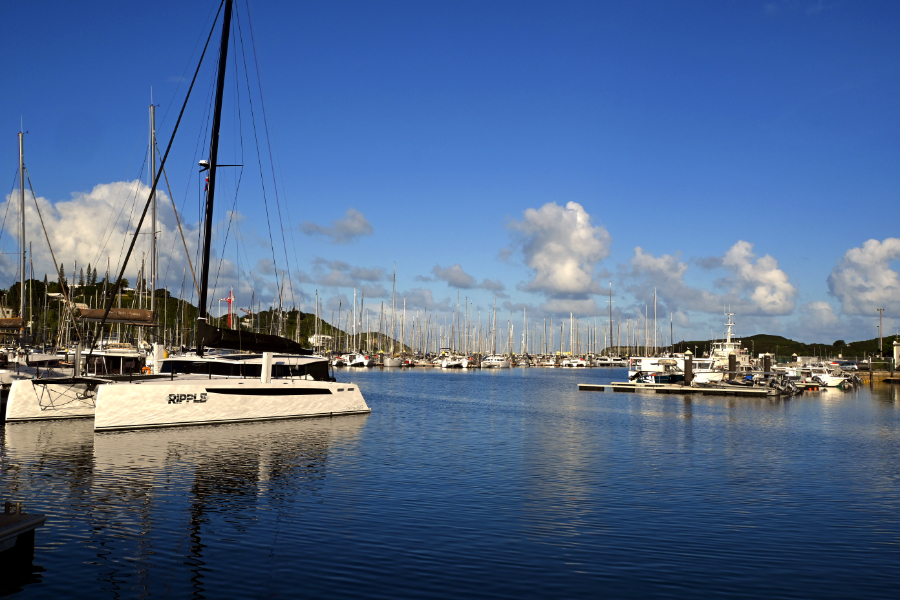
Our new home is Port Moselle – New Caledonia