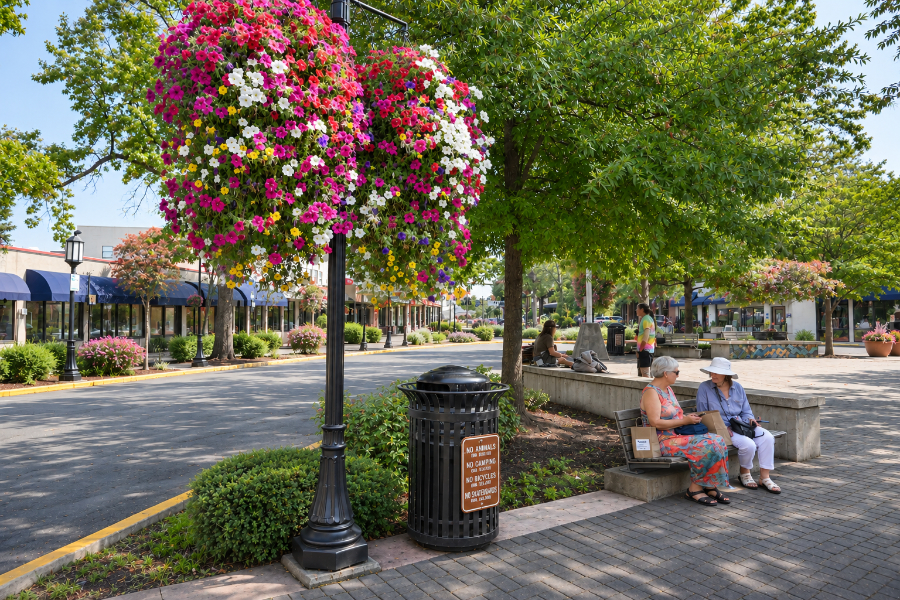
Beautiful downtown Ashland, OR
We spent some time in Ashland, Oregon. Why Ashland? Because we are still trying to figure out where we might like to live when we stop moving around. After years aboard Cream Puff, choosing somewhere to stay put is proving more complicated than choosing the next island. With an island, if we didn’t like it, we could pull up the anchor.
Ashland had enough going for it to warrant a closer look. A walkable downtown, independent shops, plenty of good restaurants, and a strong arts scene are all things we find appealing. The Oregon Shakespeare Festival is the big attraction, but there are also smaller theaters, galleries, and Southern Oregon University. For a relatively small place, it offers quite a few reasons to leave the house.
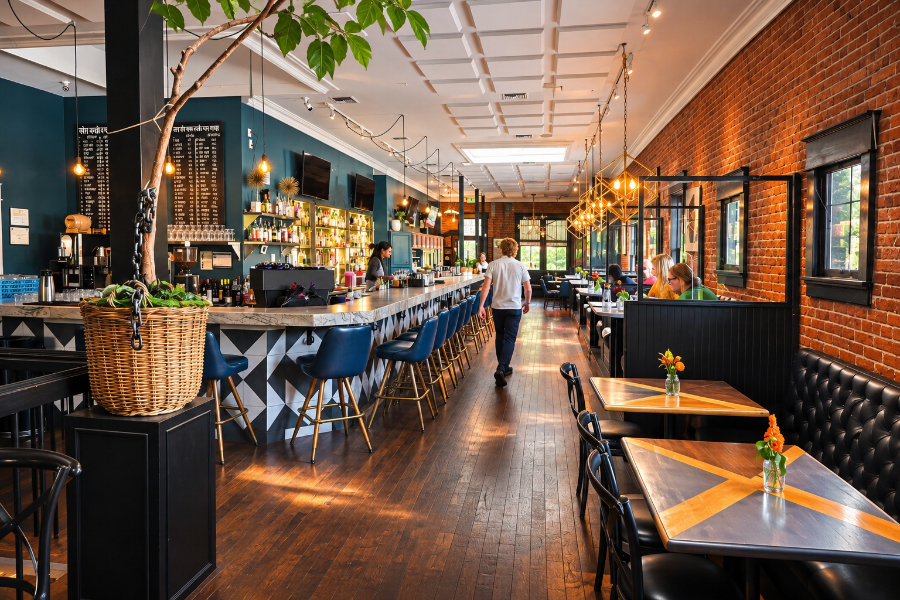
The Brickroom in Ashland. The town offers a ton of restaurants with lots of character
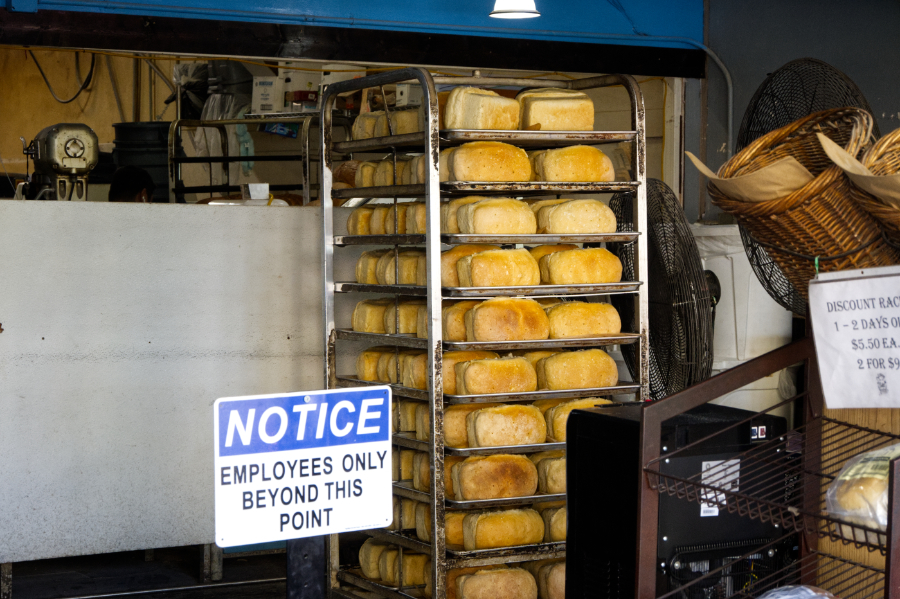
A huge plus for me is a real bakery – yum!
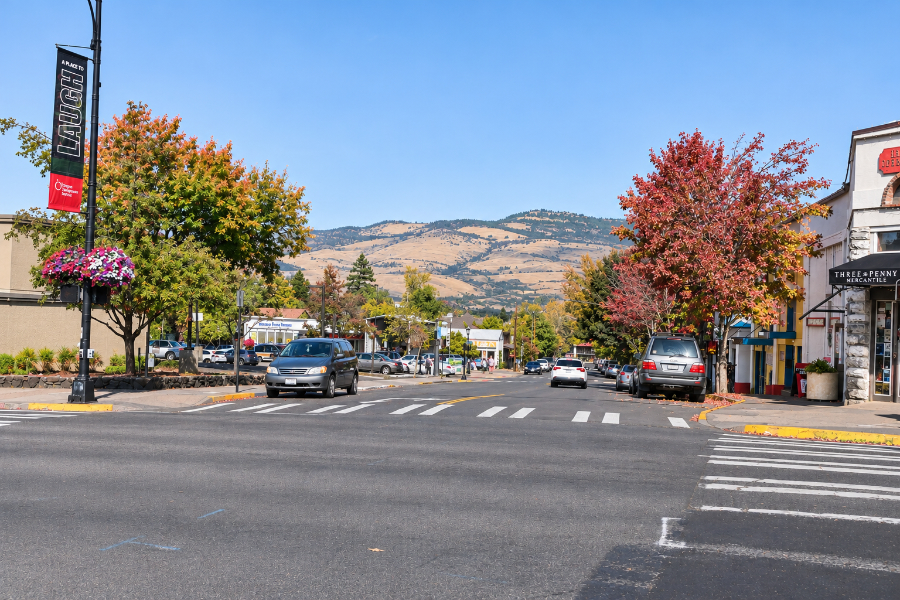
Even a normal intersection in town shows off the surrounding beauty of this state
At this point, I should mention that I absolutely hate Shakespearean stuff. I appreciate that admitting this might jeopardize my British citizenship, but there it is. Fortunately, despite its name, the Oregon Shakespeare Festival doesn’t revolve entirely around the Bard. Its productions include other playwrights and contemporary work of all genres, so living in Ashland wouldn’t require me to develop an enthusiasm as people glossolalize for three hours to explain why they’re upset.
Lithia Park is another draw. It begins right beside downtown, making it possible to combine a walk, lunch, and a little wandering without moving a car between each activity. This is increasingly how we picture everyday life. We would like going out for a loaf of bread to involve a pleasant walk, with the possibility of getting distracted along the way.
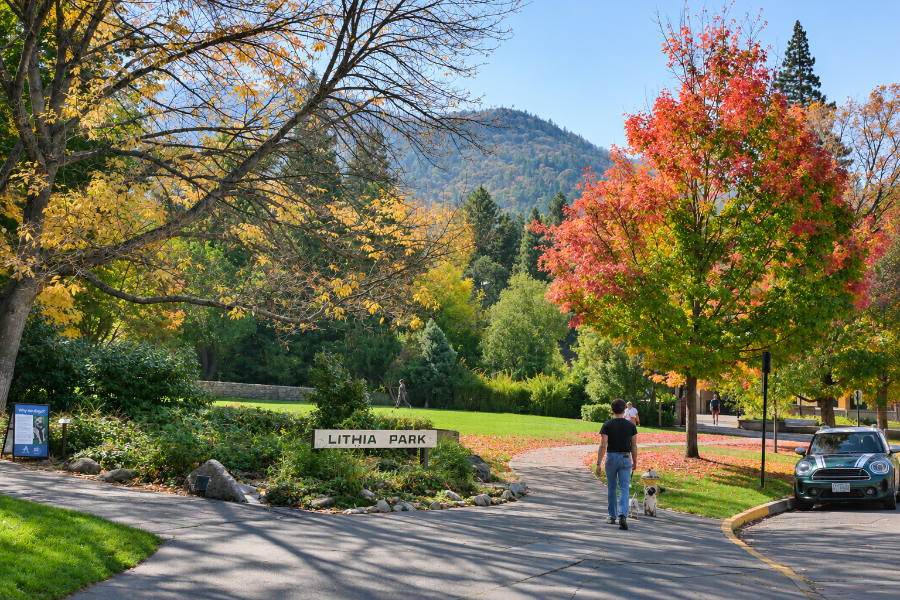
Lithia Park – just off the main street
Nearby Jacksonville also deserved a look. Jacksonville, Oregon, that is. We would have to be quite specific when giving out our new address. Otherwise, our friends might wonder why we had traveled around the world only to end up back in Florida. People who truly know us know we’d never live in Florida—ever.
Jacksonville is a former gold rush town with historic buildings and a compact downtown full of character. Shops, restaurants, and wine-tasting rooms provide places to wander, while the surrounding hills and vineyards give us somewhere to explore farther afield. The Britt concert venue adds live music to the list of attractions.
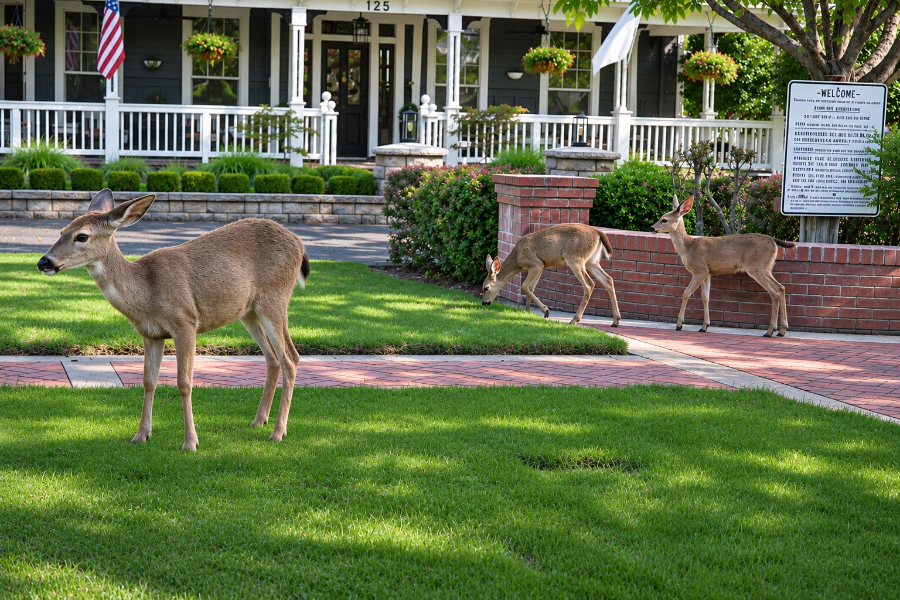
While looking at a neighborhood in Jacksonville – Oh deer!
Both Jacksonville and Ashland would keep us close to Medford. It offers a practical compromise. We could live in a small town while remaining close to larger shops, medical services, and an airport. We like a quiet life, but we don’t want a trip to Costco to require an overnight stay and a trek over a mountain pass.
Of course, the challenge is imagining ourselves living there after the novelty wears off. Visiting somewhere is easy. We need to picture an ordinary Tuesday, complete with groceries, laundry, and a dental appointment.
Importantly to us, there is also the matter of those two letters after the town’s name: OR. They mean Oregon, and Oregon means state income tax. By our estimate, choosing to live there would cost us about $10,000 a year in state income tax compared with living in Washington (no state income tax on retirement income). That’s a substantial annual subscription to an address, almost like a government HOA. We might decide Oregon is worth it, but it certainly gives us a reason to look carefully across the state line.
And $10,000 a year is real money. That’s roughly $833 a month—enough to make a substantial car payment or cover the principal and interest on about another $130,000 of a 30-year mortgage at 6.5 percent. Over five years, it adds up to $50,000, which could buy us a very nice car outright. Obviously, Washington isn’t handing out free cars at the border, but keeping money we would otherwise pay in income tax could have much the same effect. Thinking like this is how we managed to be able to afford to go sailing for a few years.
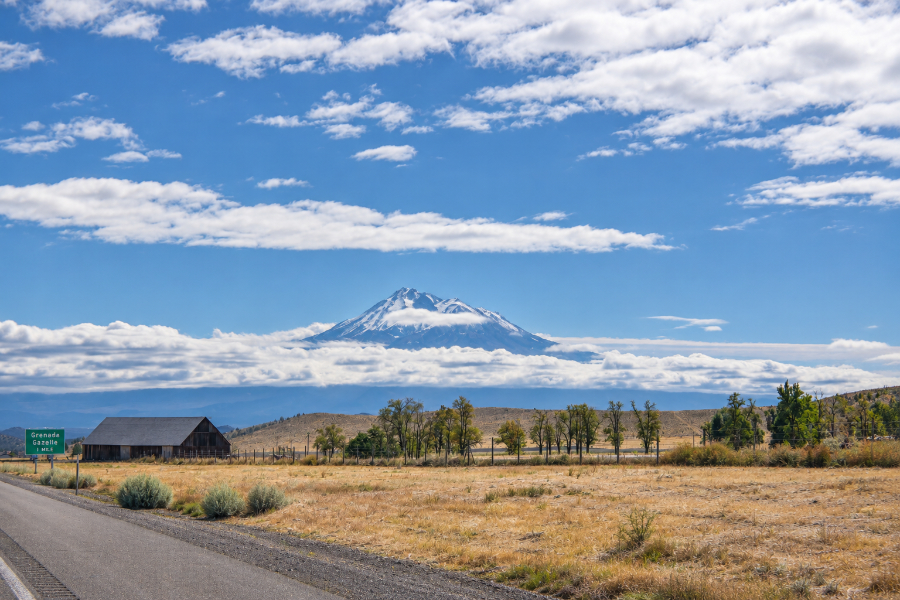
Mt Shasta from a rural road as we travel Oregon
Then there’s Portland. We visited Portland about 15 years ago before setting sail, and we loved it. We were excited to give it a look and consider it as a potential home city.
Portland earns points immediately because it’s okay to be weird. This takes some pressure off. After years of living on a sailboat, we have become accustomed to being the people whose lifestyle requires a little explanation. In Portland, we might barely register. It’s a place where we could be ‘normal’.
It is perfectly normal to have a waiter with lime-green spiked hair and two-inch gauges (stretched earlobes). And, to be perfectly honest here, he was one of the best waiters we’ve ever had the pleasure of meeting.
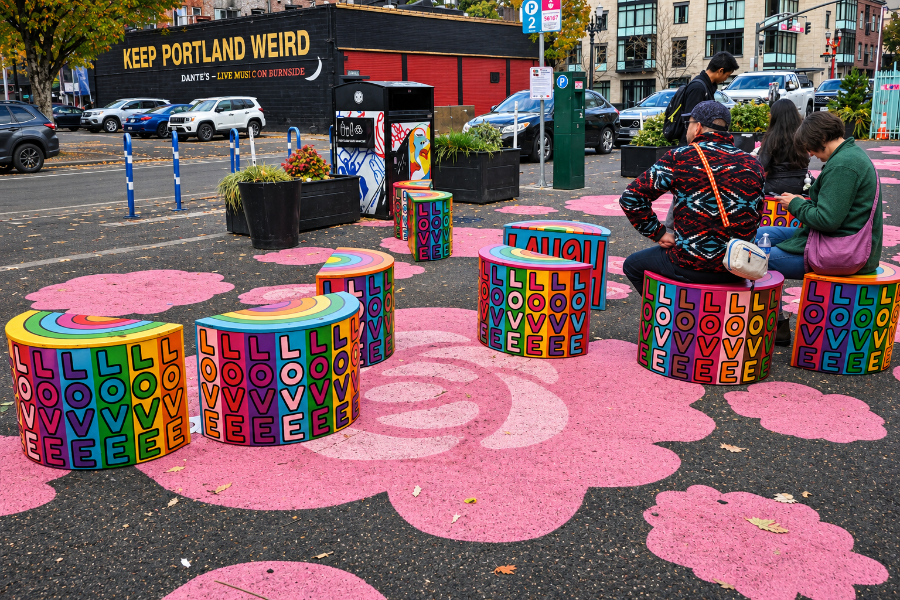
Keep Portland Weird
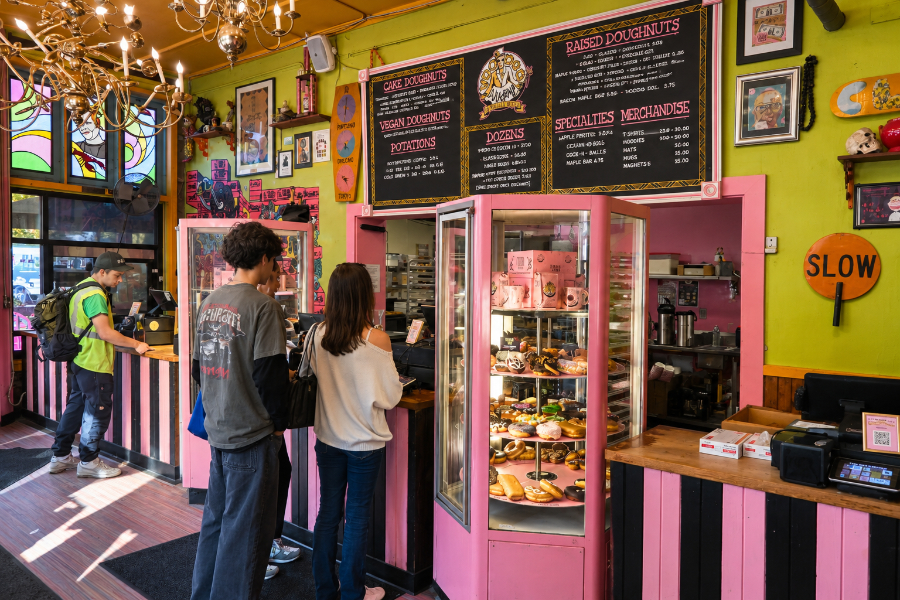
A Portland landmark – The original Voodoo Donuts. If you haven’t had one, you haven’t lived. They are amazing. This comming from a person who is lukewarm on donuts.
We also like its walkable outer neighborhoods and extensive public transportation. Our arrival was a good demonstration of how convenient that can be. We landed at Portland International Airport, took the MAX light rail into town, and got off within two blocks of our hotel, the Embassy Suites in the historic Old Town area. A short walk with our bags and we were there. No rental car counter, no navigating unfamiliar roads after a flight, and no paying to park a car while we explored on foot. We could get used to that.
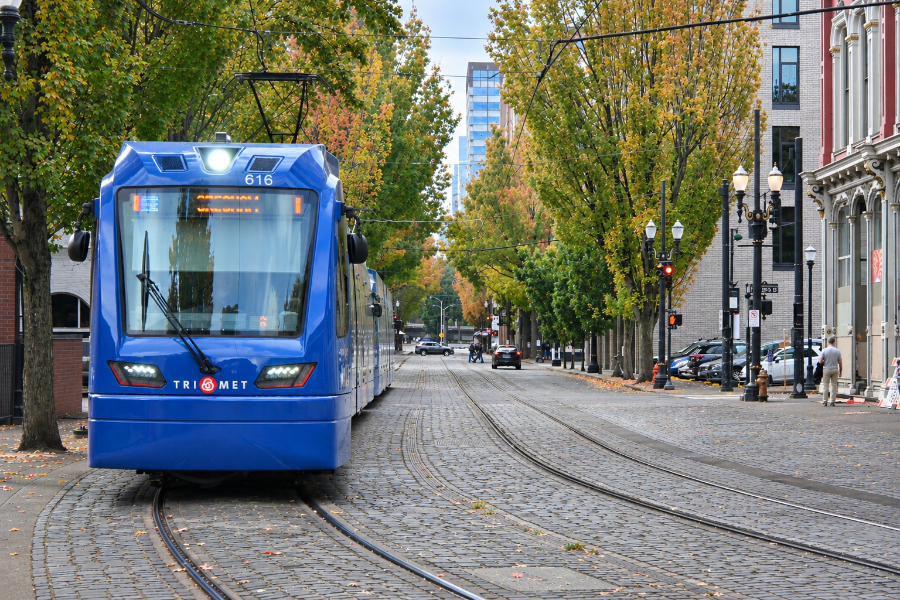
Light rail and buses are cheap and easy to use.

I love food truck food. Sadly, the prices have crept up to the range of regular restaurants. They are not the great deal they used to be
But Portland also gave us reasons to hesitate. The homelessness we encountered was deeply troubling. Seeing people living on the streets is difficult, and the scale of it would weigh heavily on a decision to call the city home. We want to feel comfortable walking around our neighborhood. At the same time, the people sleeping outside need far more than the rest of us wishing the problem would disappear.
Yes, every town and city has its homeless and panhandling problems. But Portland’s is really in your face. People sleeping in doorways, open drug use, aggressive panhandling, and the smell of urine make parts of downtown unpleasant. It’s a shame because Portland has so much going for it, but the problem is impossible to ignore. Living there could give us an opportunity to become involved and help. Once we stop traveling, we should have time to contribute to a community. Volunteering with an established local organization might be one way to do that. We wouldn’t arrive with answers, but perhaps we could make ourselves useful.
Downtown also felt noticeably different from our visit about fifteen years ago. We saw vacant storefronts, plenty of retail space for rent, and fewer people on the streets than we remembered. There seemed to be less of the everyday bustle that makes a city center feel alive. It left us wondering how the remaining businesses were managing. The real estate market is also suffering. Higher interest rates have served as a double whammy to the already struggling economy, making it a buyer’s market. We could look at this as a positive. But the question looms: has it bottomed out?
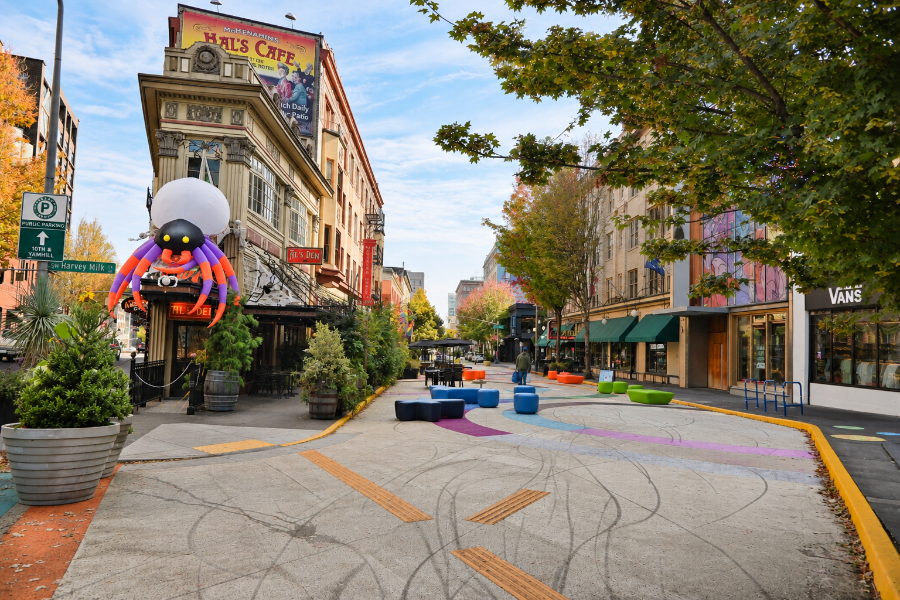
A giant spider on a Portland street
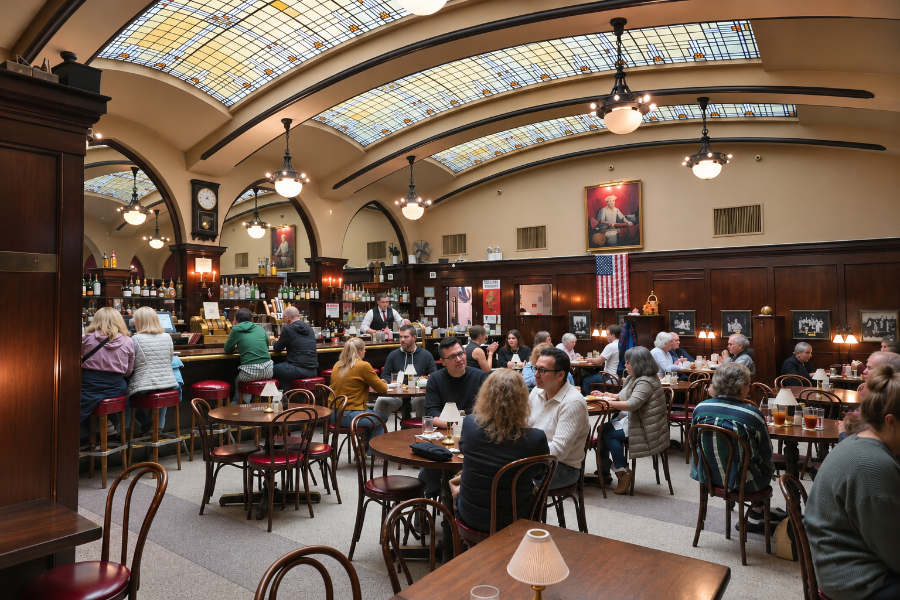
We lunched at Portland’s oldest continuously operating restaurant, established in 1879 – Huber’s Cafe
Our visit was only a snapshot, but it raised a question we couldn’t answer: is Portland going to get better or worse?
Could we be looking at a city working its way through a difficult period, with an opportunity to become part of its recovery? Or would we be moving somewhere whose best days, at least downtown, are behind it?
There is a lot about Portland we like. The freedom to be a little odd, the ability to get around without a car, and the prospect of having interesting things within walking distance all count in its favor. But choosing a home means looking beyond what makes a place enjoyable for a visit.
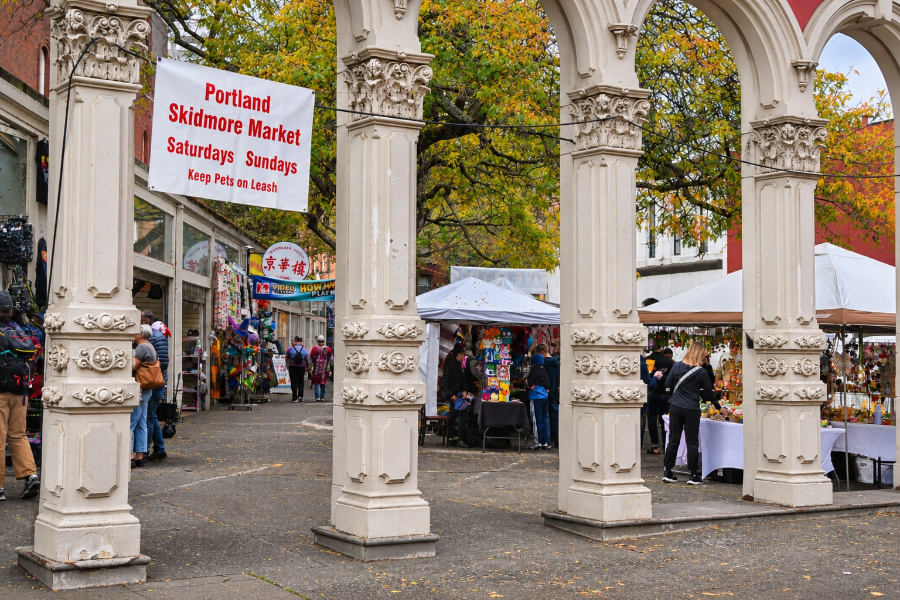
The Saturday (sometime Sunday too) Portland market is a favorite of ours. Although it is considerably smaller than we remember from our previous visit
This brings us to Vancouver, Washington.
This is where the geography starts to work in our favor. Vancouver is just across the Columbia River from Portland, but on the Washington side of the tax line. For our retirement income, that could mean keeping the roughly $10,000 a year we would otherwise expect to pay Oregon. Being able to see Oregon without paying to live in it has a certain appeal.
Downtown Vancouver also offers the sort of neighborhood we’re looking for. There are coffee shops, restaurants, independent businesses, a farmers market, and places to walk, including the waterfront. We could imagine going out on foot for much of our everyday entertainment and grocery shopping, while still having the big-box stores within a short drive when we need something less charming and more practical. Sometimes you want a little independent shop. Sometimes you need a bulk supply of toilet paper.
It seems to have some of the creative, slightly odd character we like about Portland, too. There are galleries, public art, breweries, and enough individuality to keep things interesting. We wouldn’t have to give up all the weirdness simply because we had crossed a bridge.
The visible homelessness also seemed less extensive in the downtown areas we explored. Vancouver has its own housing problems, and we wouldn’t pretend otherwise, but our experience walking around felt more comfortable. That matters when we’re considering somewhere to live rather than somewhere to spend an afternoon.
And Portland would still be accessible without driving into the city center. On weekdays, C-TRAN has a direct bus from downtown Vancouver into downtown Portland. There’s also the option of taking a bus to connect with Portland’s MAX light rail. We could enjoy what Portland offers and then head home across the river.
For now, downtown Vancouver looks like a promising compromise: a walkable neighborhood, practical shopping nearby, access to Portland, and a tax situation that suits us considerably better.
We still have to decide whether it feels like home. But keeping an extra $10,000 a year would certainly help us settle in.
So, after traveling halfway around the world, visiting countless countries, and spending years living on a boat, we find ourselves trying to decide which American town has the best combination of walkable streets, decent restaurants, interesting people, affordable housing, and reasonable taxes. Apparently, choosing a place to live is considerably harder than choosing a place to drop the anchor. At least on Cream Puff, if the neighbors were annoying, the scenery disappointing, or the local government getting on our nerves, we could simply sail away. On land, they expect you to buy a house, pay property taxes, and stay put. Whoever came up with this retirement idea clearly never owned a sailboat. I wonder if we should be looking into RV life?
It’s difficult to adjust to being normal.

Hadley Parrish Cotton was doing a set at the Portland market. I am wondering if I might have a new career as a photographer for bands. (Yes, this is edited in Photoshop)